If you’ve seen a green claim from us, on a box, in an ad or in an email, you’ll find it here with the evidence behind it. Pick a topic, or search for the claim.
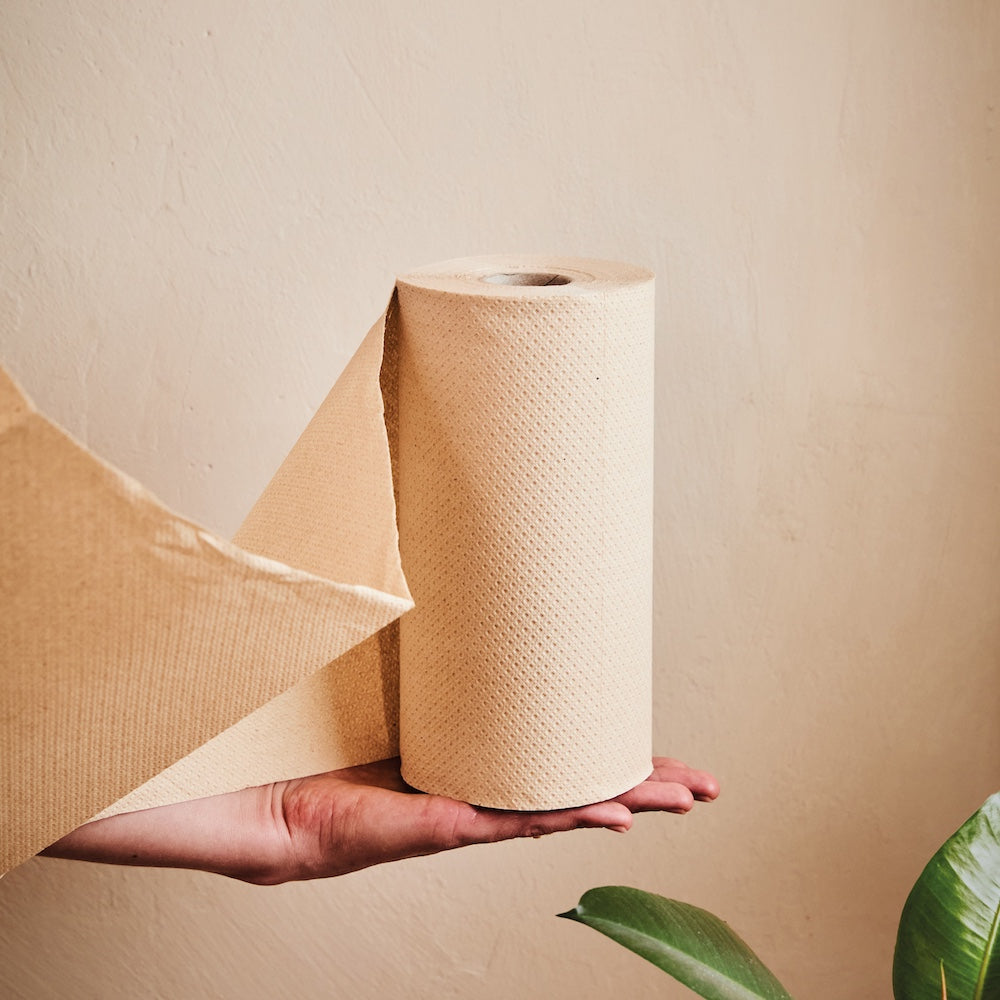
Most white loo roll is bleached, which takes extra chemicals, energy and water. We skip that step. Carbon Footprint Ltd’s comparison shows our unbleached rolls have a lower climate footprint than typical virgin wood loo roll made in the UK. We didn’t make it brown. Nature did.
Chemicals. Bleaching, especially with chlorine, releases dioxins and furans, which are persistent pollutants (EPA, UNEP, Environmental Science & Technology, PubMed). Bleaching causes 80 to 90% of the chemical releases from kraft pulp mills (NCASI). Chlorine-free methods reduce these pollutants but don’t remove them (Confederation of Paper Industries). Because we don’t bleach, our paper avoids these chemicals.
We don’t use any bleaching process to whiten our paper: no chlorine, ECF or TCF bleaching, and no peroxide, ozone or optical brighteners. The Cambridge Dictionary defines bleaching as removing colour with chemicals or sunlight, so we count chlorine-free methods as bleaching too.
Why is loo roll white?White is a habit, not a need.
Loo roll doesn’t need to be white to do its job. A US Environmental Protection Agency study found that white became the norm because shoppers linked it with being clean. One manufacturer said “clean and sanitary translates to white”. We don’t bleach ours, so it keeps its natural colour.
Carbon cuts, not creditsWe don’t offset or buy carbon credits.
We don’t offset or buy carbon credits. Like Greenpeace and WWF, we don’t think offsetting works well enough. We measure our climate footprint so we can cut it.
Science based emissions reduction targets (SBTi)Net zero by 2040, verified by the SBTi.
Our near and long-term emissions targets are approved by the Science Based Targets initiative, including a verified target to reach net zero by 2040. The SBTi is a partnership of CDP, the UN Global Compact, the World Resources Institute and WWF that checks company targets against climate science.
Shipped by rail where we canBetween Perpignan and Calais, our rolls travel on CargoBeamer’s electrified rail network.
Rail is our preferred route whenever a train is available. Between Perpignan and Calais, our rolls travel 1,400km on CargoBeamer’s electrified rail network rather than by road. We count every delivery in our own climate footprint.
How we’re rated, what we cost and how far a roll goes.
The UK’s highest rated eco loo rollRated No.1 by Ethical Consumer and The Good Shopping Guide, and an Ethical Consumer Best Buy.
We’re rated No.1 eco toilet paper by Ethical Consumer, we’re an Ethical Consumer Best Buy, and we’re No.1 on The Good Shopping Guide’s ethical toilet paper table, scoring 100. So when we say we’re the UK’s highest rated eco loo roll, or rated the UK’s best eco loo roll, this is what we mean: the top rating from both of these independent guides, for our environmental and ethical standards.
King’s Award for Sustainable DevelopmentWe won The King’s Award for Enterprise for Sustainable Development in 2025.
The King’s Awards for Enterprise are the UK’s highest official awards for British businesses. We were recognised in the Sustainable Development category in 2025.
Cheapest eco loo rollOur recycled loo roll costs less per 100 sheets than the other eco brands and big name brands we’ve checked.
Our recycled loo roll is from 21p per 100 sheets and our bamboo loo roll from 22p. That’s less than all 11 other eco loo roll brands we’ve checked, and less than big name brands such as Andrex and Cushelle. The price tables further down show the details.
So our rolls have 1.7 to 2 times as many sheets as these standard rolls, and are 1.7 to 1.9 times as long. Andrex doesn’t publish a sheet size or roll length, so we’ve left it out.
How we compare with seven other eco brands, using their own published information. Open a table to see each brand side by side.
What we mean by “better for the planet”The phrases we use, and how to read the tables.
When we say “better for the planet”, “greener”, “gentler on the environment”, “loo roll that doesn’t cost the earth” or “made better, for the planet, for everyone”, we mean:
Compared with other eco brands: we’re a more sustainable choice, as shown in the tables below.
How to read the tables. We’ve tried to be fair to every brand.
Yes or a figure means there’s published evidence, such as a certificate, test, report or official listing. Says so means the brand states it on its website, but we couldn’t find published evidence. No published evidence means we couldn’t find the brand saying or evidencing it. Click any cell to see where it comes from. If you think we’ve got something wrong, email hello@nakedpaper.com and we’ll check and update it.
AccreditationsEthical Consumer and B Corp scores, published LCAs and more, across eight eco brands.
Based on publicly available data gathered October 2026. Will be updated every 12 months (minimum). Climate footprint figures come from each brand’s own published lifecycle analysis where available. Click a figure to see its source. They were calculated by different providers using different scopes, so they’re not a like-for-like comparison.
Smaller climate footprint than other eco brandsOur figures compared with typical virgin wood, bamboo and recycled loo roll.
Carbon Footprint Ltd worked out the climate footprint of our loo roll and of typical loo roll made from recycled paper, bamboo and virgin wood, using the same method for all of them. Ours is about half of each.
Climate footprint, kg CO₂e per kg of loo roll
Naked Paper bamboo and recycled1.11 to 1.13
Typical recycled loo roll, made in the UK2.22
Typical bamboo loo roll, made in China2.35
Typical virgin wood loo roll, made in the UK2.38
Source: Carbon Footprint Ltd, 2023. Raw materials and manufacturing (cradle to factory gate), same method for every roll.
CO₂e is the climate impact of all greenhouse gases, shown as the equivalent amount of CO₂. These figures only cover raw materials and manufacturing. Our full product footprint, which also counts delivery and disposal, is in our product climate footprint.
Our figures and prices
Our climate footprint, how our prices compare, and how we work out our savings.
Our product climate footprintLoo roll, kitchen roll and tissues, in kg CO₂e per kg.
Calculated by Inèdit in line with ISO 14067. Each kg of our bamboo loo roll produces 0.59kg CO₂e (about 1.5 miles in a petrol car) and each kg of recycled loo roll 0.35kg CO₂e (about 0.89 miles), using the US EPA calculator. It covers raw materials and their transport, making the paper, factory waste, delivery to our Birmingham warehouse and to your door, and disposal. Inèdit carried out and checked the study, but it hasn’t been reviewed by a separate third party.
Price comparisonCost per 100 sheets for loo roll, kitchen roll and tissues.
When comparing prices, we’ve taken the cost per 100 sheets for the largest/most cost-efficient pack of loo roll available from each brand. When a brand offers an ongoing discount for subscribing, we have used the discounted price. When calculating average savings per year versus other brands, we’ve based this on an average household of 2.4 people, the average person using 127 rolls per year, and the average loo roll containing 200 sheets per roll. We’ve then taken the costs per 100 sheets for each brand and calculated the cost difference accordingly. Based on publicly available data gathered October 2026, from brand websites and Tesco (Andrex Family Soft 24 roll pack). Will be updated every 12 months (minimum).
Comparison based on publicly available data gathered October 2026, from brand websites and Tesco (Regina Blitz 3 roll pack, Plenty Ultrasorb 4 roll pack). *Price comparison based on cost per 100 sheets of largest/most cost-efficient pack available from each brand. Prices include ongoing subscription discount for all brands that offer one.
Tissues
BrandCost per 100 tissues
Naked PaperRecycled£1.42
Naked PaperBamboo£1.50
Bazoo£1.75
Bumboo£2.21
Kleenex£2.23
Cheeky Panda£2.25
Who Gives a Crap£2.31
Serious Tissues£2.71
Comparison based on publicly available data gathered October 2026, from brand websites and Tesco (Kleenex Mega Pack). *Price comparison based on cost per 100 tissues of largest/most cost-efficient pack available from each brand. Prices include ongoing subscription discount for all brands that offer one.
How we calculate our savingsCO₂e, trees, chemicals and plastic saved per roll.
These figures compare each Naked Paper roll with a standard roll made from virgin wood pulp. They’re based on Carbon Footprint Ltd’s 2023 comparison, and we’ll update them when our new comparison life cycle assessment is done.
Feature
Per roll
Comparison
CO2e/kg saved (Bamboo | Recycled)
0.1909 | 0.1883
Road miles
Trees saved
0.00125
Tennis courts
Chemical litres saved
0.0097
Full bathtubs
Plastic kg saved
0.00185
African elephants
CO₂e. Most brands don’t publish their footprint, so Carbon Footprint Ltd modelled typical UK virgin wood, UK recycled and Chinese bamboo rolls from public data on raw materials, manufacturing and distribution. The saving per roll against virgin wood is 0.19088kg (bamboo) and 0.18829kg (recycled). We turn this into driving miles with the US EPA calculator.
Chemicals. 0.0097 litres of harsh chemicals per standard roll (Carbon Footprint Ltd). One bath holds 378.5 litres (Royal Bathrooms).
Plastic. 1.85g per roll, from our factory’s 2022 study of the plastic wrap on three leading Spanish supermarket packs (44.4g per 24 rolls, 88.8g per 48).
Factories and supply chains compared
Factories and productionWhere each brand’s products are made, and how.
As of October 2026, LC Paper is the only certified B Corp tissue factory we could find in the B Corp directory. Velvet CARE, which was certified in 2023, is no longer listed.
Factory and energy
7 claims
How and where our paper is made. When we say “our factory”, we mean LC Paper, our manufacturer in Girona, Spain.
Factory powered by renewable energyRenewable energy from the sun, hydropower and renewable biofuels.
Our factory is powered by renewable energy from the sun, hydropower and renewable biofuels.
A few of the forklifts that move the heaviest reels still run on diesel. LC Paper plan to change these when possible.
Water tested every quarter and returned to the riverReturned to the river Fluvià, in northern Spain.
Our factory treats its water and tests it every quarter, before it comes in and after it leaves, to check it’s within the Catalan Water Agency’s limits before it goes back into the river Fluvià in northern Spain.
Our bamboo is grown without any fertilisers or pesticides, as our bamboo pulp suppliers state (1, 2)
FSC-certified bamboo, not cleared forest. Our bamboo pulp comes from FSC-certified suppliers as FSC 100%, which means it comes from FSC-certified forests. FSC rules don’t allow forests created by clearing natural forest after 31 December 2020 to be certified, unless the harm has been put right under FSC’s remedy framework.
Trees and loo rollNo trees are cut down to make our rolls.
Our rolls are made from FSC-certified bamboo or recycled cardboard and kraft paper, so no trees are cut down to make them.
Normal loo roll and household tissue use the equivalent of nearly 1 million trees a day worldwide. Plantation trees take from around 7 years (some fast-growing eucalyptus) to more than 100 years (some European plantations) to be ready to harvest.
Rolls not individually wrappedHow much paper that saves, and how we work it out.
When calculating the amount of paper saved when you buy loo rolls that have not been individually wrapped, we have measured the sheets of paper used by Who Gives a Crap to wrap their rolls (27.5cm x 42cm). We've multiplied the length of this sheet (42cm) by the average household size of 2.4 people, and an average annual usage of 127 rolls per person per year, which comes to a length of 128 metres of paper, taller than Big Ben, at 96m.
People and fair trade
3 claims
The people who make our products, and how they’re paid.
Living Wage employerNaked Paper is an accredited Living Wage employer.
Our green claims policyHow we check every green claim before we make it, and how to tell us if you think we’ve got one wrong.
Our Green Claims Policy sets the standard every green claim has to meet: on our website, packaging, social media, ads and anywhere else we talk about our impact. It follows the CMA’s Green Claims Code and the Anti-Greenwash Charter, and the Charter reviews our campaigns against it.
Our founders are responsible for it. Everyone at Naked Paper is trained on it, and anything with a green claim is checked and recorded before it goes out. If something doesn’t meet the policy, we correct it.
We use the Cambridge Dictionary definition: “causing, or made in a way that causes, little or no damage to the environment and therefore able to continue for a long time.” So we look at our whole impact, including our emissions, our raw materials and our social impact, and we get independent certification so you can check our claims for yourself.