


How we’re cutting waste

It’s difficult to make anything without waste. Whether you’re making bread, boxer shorts or bleach-free toilet paper, there are inevitably going to be offcuts and by-products, water run-off and excess energy.
At Naked Paper, we try to reclaim waste and put it to use to improve our products and reduce our impact. Today we’re looking at some of the ways we’ve found to make our manufacturing more circular.
But first, it’s worth asking what’s wrong with the standard, linear approach to making things.

What’s wrong with the traditional approach?
The traditional way of making and consuming products can be described as a “linear economy”. This means that things go from A to B to C. We:
- Take raw materials from the planet
- Make them into products
- Dispose of those products once we’re finished with them
The linear model suggests a clean, simple line from extraction to waste. But what you don’t see is the sheer amount of usable stuff that falls out along the way.
Let’s take conventional toilet paper manufacturing as an example. Most toilet paper is made using virgin wood pulp and bleached to create the bright white colour we’ve become used to. Some manufacturers also use additives such as formaldehyde to alter the strength and feel of the sheets, while others wrap their rolls in extra dyed paper or plastic.
By the time the toilet paper has served its purpose in your home, there’s a small pile of packaging left behind and a much larger, unseen footprint of water, chemicals and fuel that has passed through the factory.
And when you consider that the average person in the UK gets through around 127 rolls every year, it quickly adds up.

What does a circular economy look like?
Unlike the straight line of the linear economy, a circular economy is designed to work more like a loop.
Instead of thinking only about how a product will look and function, manufacturers spend a lot of time considering how it will be made and what will happen to it at the end of its life. The aim is to catch usable waste and by-products, pull them back into the manufacturing process and cut down the pile of waste left at the end.
Toilet paper is, by its nature, a single-use product, but there are still plenty of ways we can improve the process of making it and make it more circular.
Here’s how we approach it at Naked Paper.

Recycle, recycle, recycle
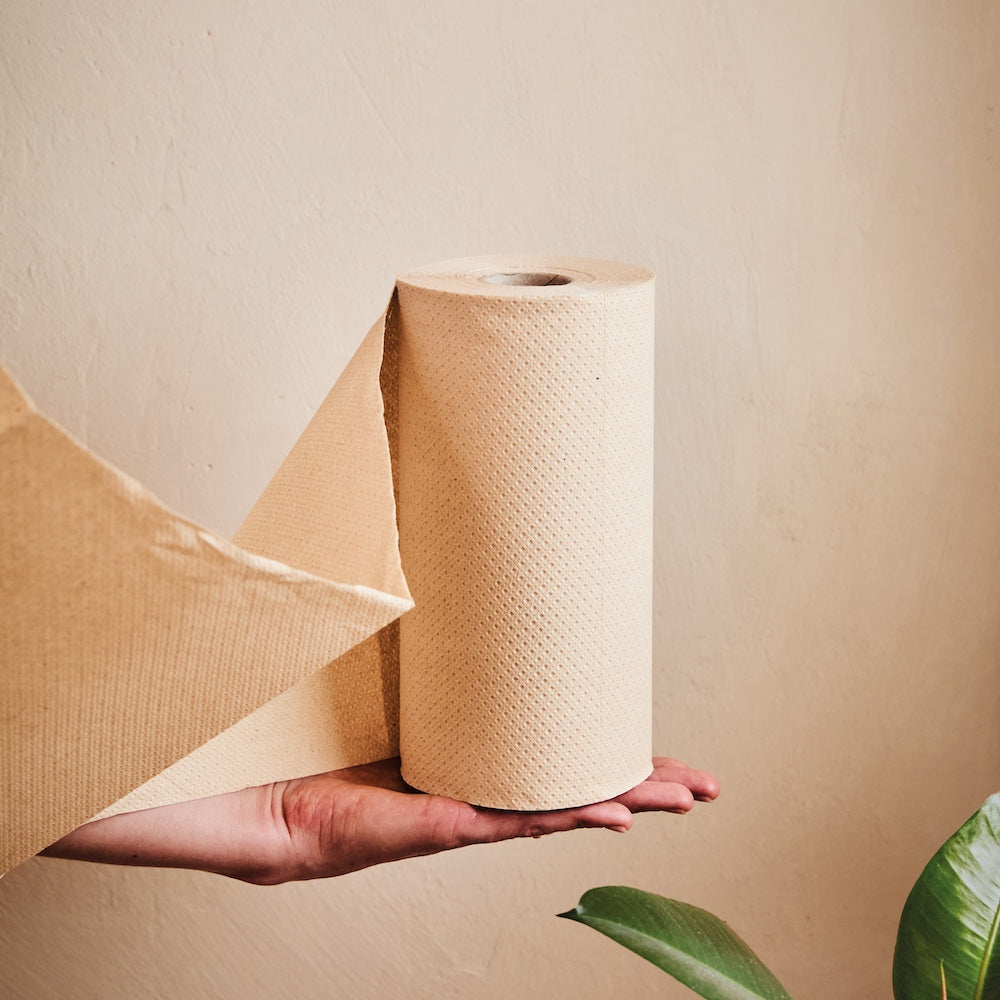
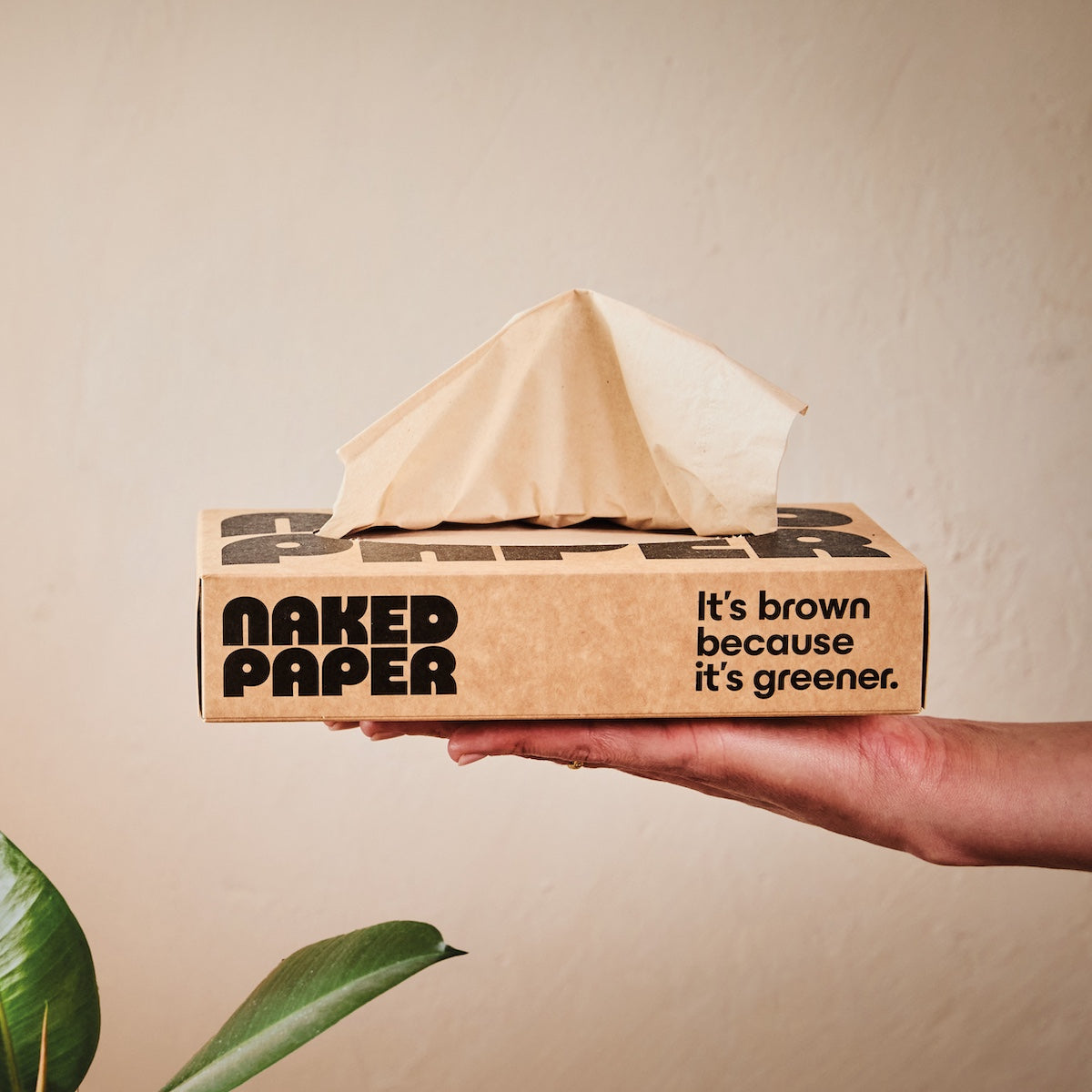
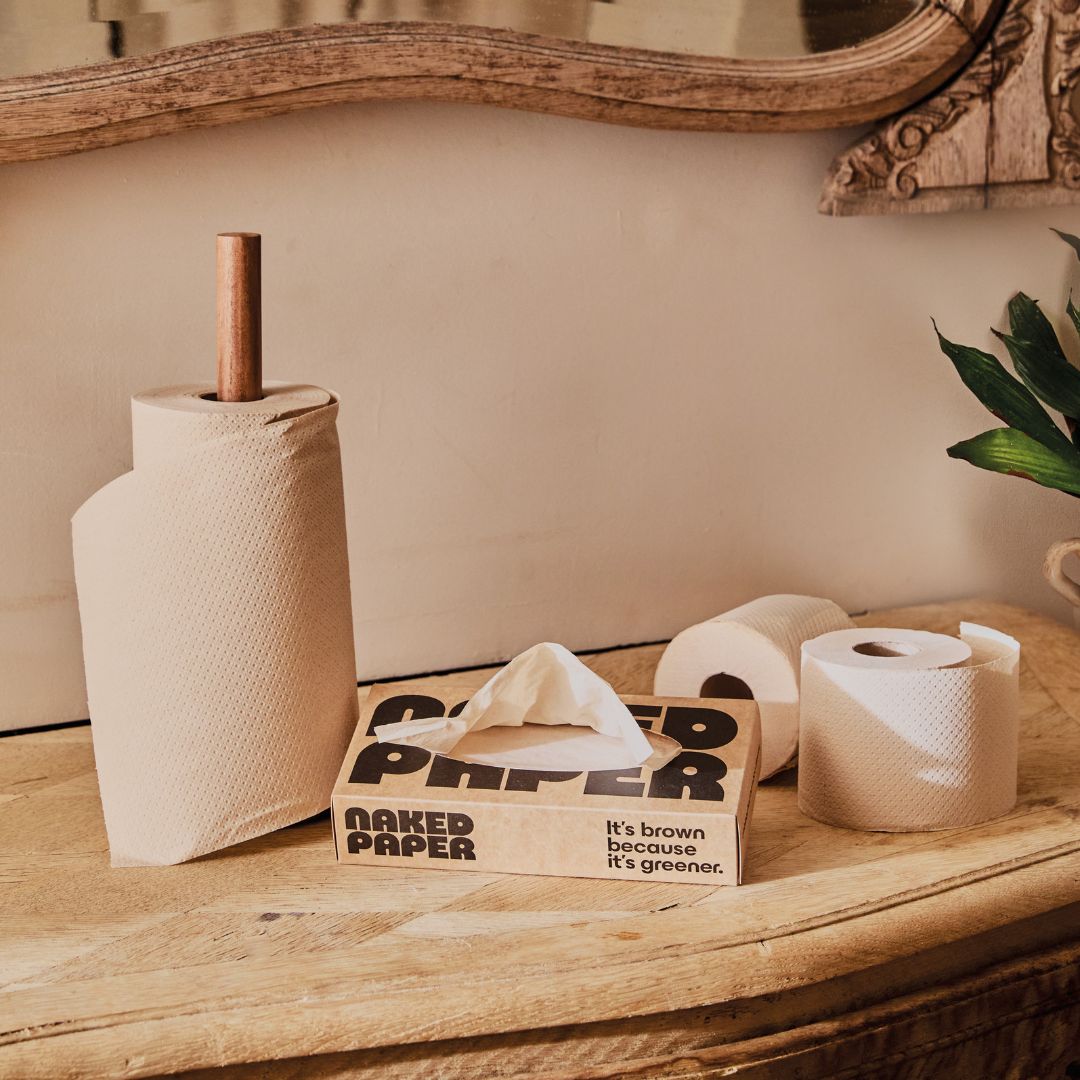
We’ll start with the most obvious part of our circular manufacturing: our recycled toilet paper, tissues, and kitchen rolls are made from recycled material.
Rather than starting with virgin wood pulp, we use cardboard boxes and brown paper collected from supermarkets and warehouses near our factory. This packaging waste is processed at a local recycling plant.
And we’ll pause here, because this recycling plant is a fantastic example of a circular economy in its own right.
Many recycling plants rely heavily on manual sorting, where a big pile of waste is divided into different categories by hand and eye. It’s slow work and it often means that only around half of the potentially useful material delivered to a facility can be successfully recovered.
Unlike this slow, manual process, the facility we use to sort the cardboard and paper that becomes our recycled loo roll is fully automated. Waste travels along a series of conveyor belts, where different types of material, including cardboard, plastic and metal, are detected and sorted automatically.
It’s one of the most efficient recycling plants in the world. It currently recovers around 82% of the material that enters the plant and is working towards 100%.
With our recycling plant humming along and tirelessly pulling waste material back into circulation, we can turn to another place where we cut waste: our offcuts and seconds.

Giving blooper rolls another go
Quality control is really important to us. Naked Paper products are checked by machine and by eye as they come off the production line so that anything that doesn’t meet our standards can be removed.
Standard bloopers at Naked Paper include rolls that are cut too short, rolls with uneven edges and places where the two plies have separated. Regular readers will know that a wonky roll or two will occasionally slip into a box, but for the most part they’re diverted away from the production line and into the reject pile.
But there’s no need to break out the violins for these tissue oddities: being rejected isn’t the end of their story.
Any Naked Paper products that don’t pass inspection get a new lease of life back at the beginning of our process. They’re shredded and added to the sorted cardboard and paper from our recycling plant, becoming part of the mix for our recycled rolls.
The same thing happens to our offcuts: the short ends of tissue sliced from our parent rolls, along with any extra bits of cardboard from our inner tubes or packaging. All of it goes into the mix and becomes recycled toilet paper, kitchen roll and tissues.
So the mix for our recycled rolls is made up of lots of material from our production line and the local area that would otherwise be wasted. And what about the water that turns this mix into pulp?
There’s a circular story there too.

Borrowing water, then giving it back
Every toilet roll, pack of tissues and kitchen roll you see, whether it’s recycled, bamboo or made from any other material, will once have been a vat of pulp.
To make any paper product, you take raw materials, cut them up, and mix and heat them with water to make a porridge-like pulp mixture that goes on to be pressed and dried. This process uses a lot of water, particularly when there’s an added bleaching stage to turn naturally coloured pulp bright white.
Of course, there’s no bleaching stage at Naked Paper. We don’t add fragrances, formaldehyde or other unnecessary harsh chemicals either. The small number of ingredients used during manufacturing have passed the EU’s stringent REACH requirements, which regulate the use of chemicals and their potential impact on people and the environment.
It’s great to be able to reassure customers that Naked Paper is free from harsh chemicals and unwanted extras such as forever chemicals and BPA. And it has another benefit, because reducing what goes into our pulp makes it easier to look after the water used to produce it.
Since 1881, the factory where Naked Paper is made has drawn water from the nearby River Fluvià. The river has been a great neighbour, and we return the favour by making sure the water we borrow is returned just as clean as when it arrived.
After seven turns through the system making Naked Paper pulp, the water is filtered and organically treated to remove any remaining paper fibres before being returned to the Fluvià.
The water entering and leaving the factory is tested every quarter against a range of important environmental markers. This allows the factory to check that the manufacturing process hasn’t caused any degradation in water quality.
The water isn’t ours to keep, and it’s certainly not ours to pollute. We draw from the river, keep the water clean and put it back.

Keeping useful things in the loop
That’s what we mean when we say Naked Paper is made in a more circular way. It’s not a single decision, but a series of ongoing, thoughtful changes put in place at every stage.
It’s choosing materials carefully, treating natural resources with respect and finding a home for odds and ends of waste that might otherwise go overlooked.
We’re always looking for ways to improve, and we know there’s more work to do. But every nudge moves us a little further away from the old take, make and dispose model, and a little closer to a truly circular loo roll.
(Sorry, couldn’t resist.)
Want to try Naked Paper?
Recent blog posts
-

Toilet roll-off: Naked Paper vs. Andrex
When it comes to good-value toilet paper, UK households have plenty of options. At Naked Paper, we’re proud to see our bleach-free toilet rolls, tissues, and kitchen paper towels in homes up and down the country, and we’re always happy...
-

Out in the Wild: Wild Willy Cabins
Our wholesale customers are at the heart of Naked Paper, sharing our bleach-free toilet paper with guests and colleagues in all kinds of businesses across the UK. It’s always great to hear about the values they bring to the work...
-

Why is my toilet paper so dusty? And how can I stop it?
Dusty bathroom? Sneezing on the loo? Most of us could stand to run a hoover around more often (maybe it’s just us). But if you're consistently battling fluff in your bathroom, you might want to take a closer look at...


