


Always brown, never uniform

Every now and then we receive an email like this:
"We've been subscribers for a while now and our most recent delivery is significantly lighter than the usual colour of rolls. It's not just the odd roll, it's the entire delivery. Have you changed something in your manufacturing process? Can you reassure me that you're not using bleach still please?"
First of all, thank you. We love receiving emails like this because it tells us our customers are on the same page as us when it comes to bleach in toilet paper, tissues, and kitchen rolls.
Having taken a firm stance against unnecessary chemicals in everyday products, the last thing we want is for a customer to pick up a roll of Naked Paper, notice the shade is different from the last box, and think we've backtracked on bleach.
We still don't bleach our products. The lighter colour is just the shade this particular batch happened to come out.
But why would this happen? Time to get colourful.

Eco toilet paper with a difference
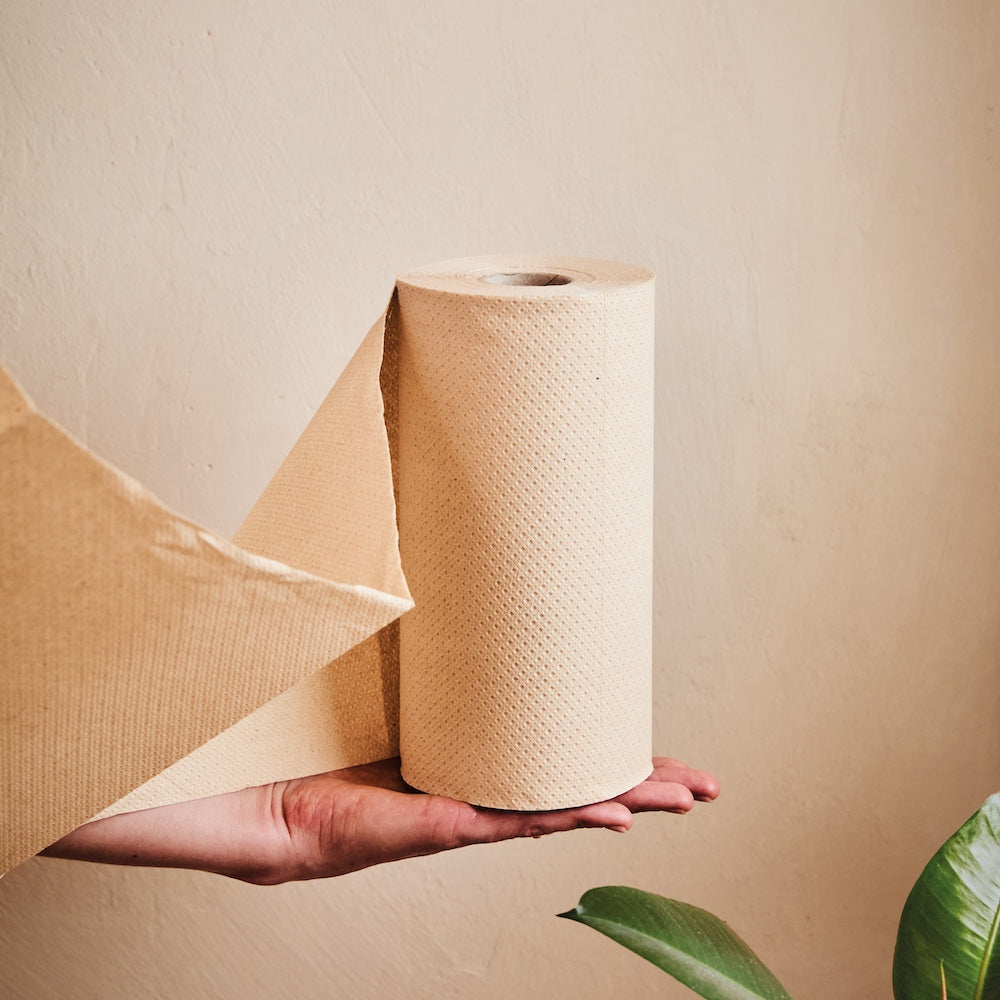
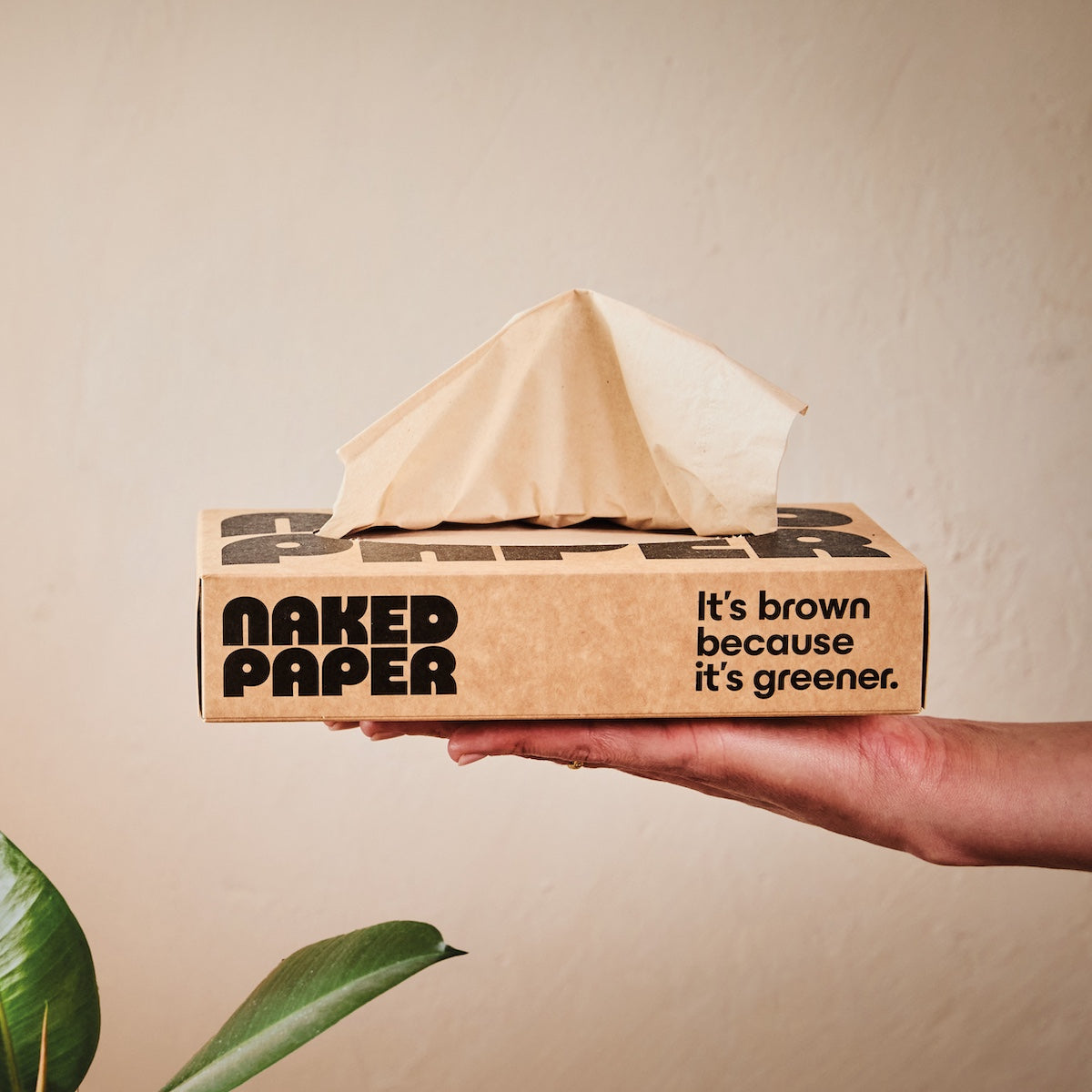
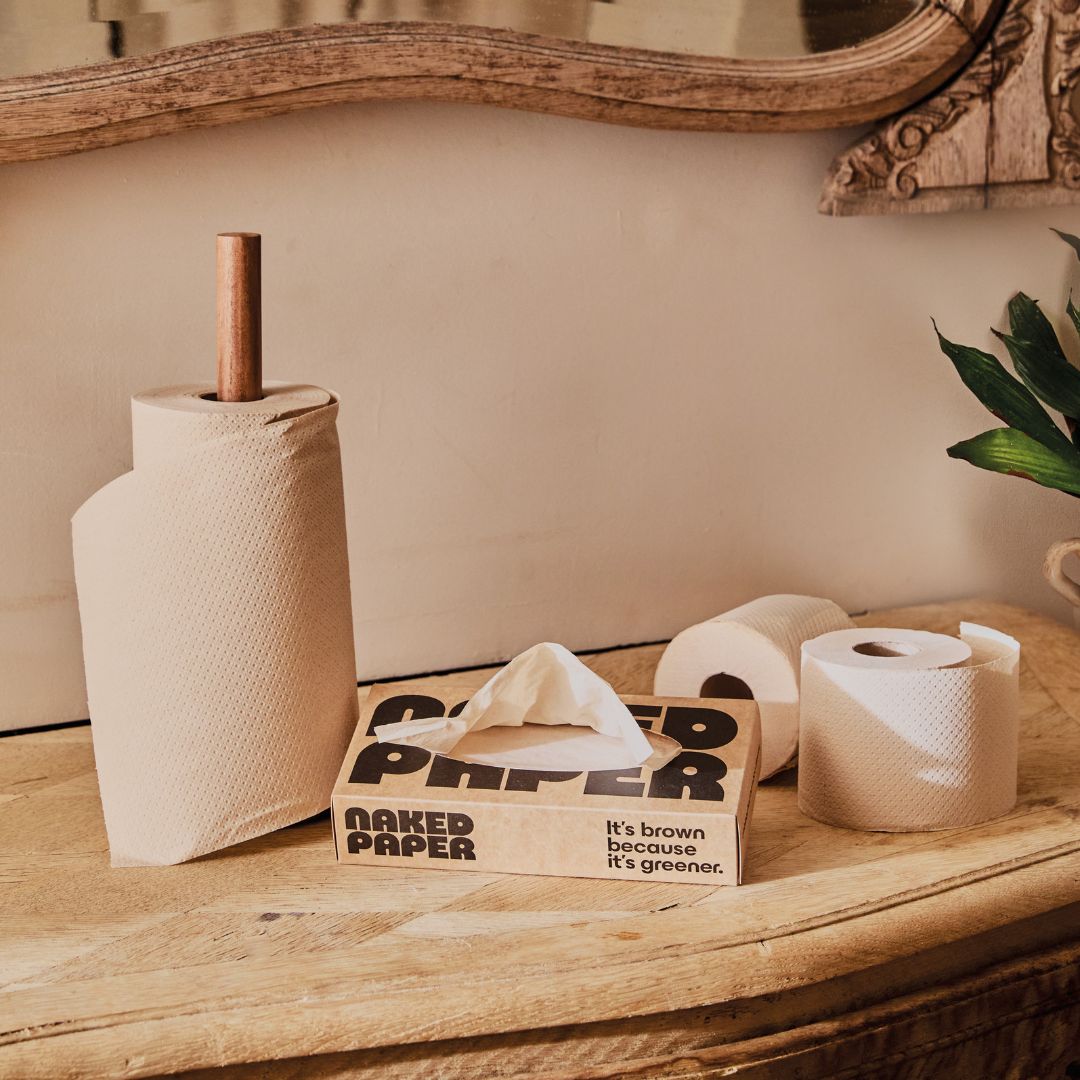
The first thing you'll notice about Naked Paper products is that they aren't the bright white that's standard for tissue products. Instead, they come in shades of beige and brown.
And if you become one of our thousands of happy customers who purchases regularly you might notice even more difference, because the colour can change over time. A box you buy in April might be the colour of a very milky tea, while the next one you order in November is more of a strong brew.
We make millions of toilet rolls every year and we expect to see the odd manufacturing error, but colour variation isn't one of them.
In fact, it's one of the clearest signs of our whole approach to making Naked Paper.

The default colour of paper is brown
You'd be forgiven for thinking paper is naturally white. We're surrounded by bright white sheets every day, from napkins to note books. White paper is so common that some people ask us whether Naked Paper has been dyed to make it brown!
But in a way, our products are the default. The brown shade of our bamboo products – and, ultimately, of the cardboard and packaging we use for our recycled range – comes from the raw materials we use to make them, with no extra processing steps to change the colour.
The original source of the brown you see in Naked Paper is lignin; a natural part of trees and plants. Lignin acts a bit like cement, holding the fibres of the plant together and giving it structure and strength. And lignin, as you’ve probably guessed, is brown.
To make paper, you need to remove lignin from the soft cellulose fibre of wood or bamboo. This is done by cutting up the timber into chips and boiling those chips with water. As the mixture boils, lignin and cellulose fibres break away from each other, and you can wash the lignin away. You end up with a soft cellulose pulp that can be made into paper, card, or loo roll.
But chopping and boiling in this way doesn’t remove all of the lignin. A small amount remains in the pulp even after this process, so the pulp is still a light brown colour.
For most paper makers, this is where bleaching comes in. There are various chemicals that can be used to whiten paper pulp, but the most common are chlorine bleach, peroxide or sodium dithionite.
It's an extra processing step to remove a completely natural part of the raw materials. Stripping out those last remaining drops of lignin doesn't make toilet paper softer, stronger or more absorbent. It just makes the final product bright white and more uniform.
It's not how we do things at Naked Paper.

A bleach-free philosophy
From the very beginning, we knew we wanted to skip the bleach. We started Naked Paper in 2020 with a pallet of bleach-free toilet rolls that we unloaded into our tiny warehouse space by hand. Our bamboo toilet paper, tissues and kitchen rolls were brown because that was the colour of the bamboo pulp we used to make them.
By 2023, the warehouse had grown and we'd decided to add recycled products to the line-up. Of course we wanted to stick to the same bleach-free approach, but there was a challenge.
When you're making recycled paper, the story stops being about lignin and starts being about ink.

Bleach and recycled paper
Recycled paper and tissue products start life as scrap paper and card. The standard mix used by most companies will include things like office paper, receipts, leaflets and brochures, all types of paper that have been heavily printed on with inks.
This waste paper is collected together and then chopped up and boiled. The process is similar to making paper from trees or bamboo, but instead of brown, this pulp will tend to come out a sludgy grey colour because of all of those inks mixing together.
For years, the common wisdom has been that customers won't buy grey toilet paper. So once again, manufacturers turn to bleaching chemicals and even optical brighteners to produce the uniform white rolls that have become the standard.
Obviously, this was a non-starter for Naked Paper. We'd never bleached our bamboo products, and we weren't about to start bleaching our new recycled alternatives. But we weren't sold on the idea of grey rolls either.
We already knew brown toilet paper would sell perfectly well; all we needed to do was find a naturally brown source of pulp.
The answer was surprisingly simple.

A different way of making recycled toilet paper
Instead of using old office paper and brochures, we make our recycled toilet paper, tissues and kitchen rolls from unbleached brown cardboard and manilla packaging paper collected around our factory.
Those materials are already brown because manufacturers of cardboard and paper packaging generally skip the bleaching stage too. Nobody cares about the colour of a cardboard box.
So by recycling boxes and packing paper we can make recycled toilet paper, kitchen rolls and tissues, without bleach, that sit neatly alongside our bamboo range. Same philosophy, different raw material.

Why the colour changes
That's why our products are brown, but let's return to the email at the start of this article. Why aren't they always the same shade of brown?
Like any crop, bamboo changes with the weather and the growing conditions. A batch of bamboo pulp that was grown in forest A in the summer is likely to be a different colour than a batch from forest B grown during heavy rains.
Our recycled products, on the other hand, take their colour from the specific mix of cardboard and packaging paper that’s available in the area around our factory in Spain when a batch is made. Some batches will turn out lighter, some darker.
So between the changing seasons in the bamboo forests and the mix of packaging collected around our factory there's plenty of room for variety.

It's brown because it's greener
Naked Paper is never uniform. Seasons change, different mixtures of paper and card get delivered to our factory, and no two stalks of bamboo are exactly the same colour.
For years, manufacturers have tried to iron out natural variation through refining, processing and bleaching. The goal has been to make every product identical and predictable.
That's not the goal for us. We love seeing our colours shift from batch to batch, just like we love the emails that we get when there’s a noticeable change. At Naked Paper we make uncompromising, uncomplicated products for people who notice the details.
Want to join them?
Recent blog posts
-

Out in the Wild: Wild Willy Cabins
Our wholesale customers are at the heart of Naked Paper, sharing our bleach-free toilet paper with guests and colleagues in all kinds of businesses across the UK. It’s always great to hear about the values they bring to the work...
-

Why is my toilet paper so dusty? And how can I stop it?
Dusty bathroom? Sneezing on the loo? Most of us could stand to run a hoover around more often (maybe it’s just us). But if you're consistently battling fluff in your bathroom, you might want to take a closer look at...
-

What is bleached toilet paper?
The word "bleached" has been around for a long time. The earliest recorded use of the term is from 1610, and it meant the same thing then as it means now; something that has been whitened from its natural colour, At...


