


Does toilet paper have chemicals?

We pride ourselves on being open and honest about how we make our toilet paper and tissue products, and we're always happy to answer questions about the loo roll business in general.
According to Google, this is a big one: does toilet paper have chemicals?
If you've got here because you searched for that question, you're not alone.
Everything is made of chemicals, including water and natural plant fibres. But we know when people ask this question, they're looking for simple clarity and reassurance: what kinds of chemicals are used to make toilet paper, and should you be concerned about them?
Naked Paper toilet paper is bleach-free, formaldehyde-free, and free from PFAS and BPA. We only use gentle, REACH-compliant ingredients to cleanse and bind our tissue, and we're completely open about what goes into our products. But that's not the case for every roll out there, so today we're running through the facts.

What chemicals can be found in toilet paper?
The first thing we should point out is that not all toilet paper is made the same way. For something so simple, there's actually a surprising amount of variation in raw materials, fuel sources and manufacturing processes across the industry.
If you'd like to see just how different these approaches can be, our Green Credentials page features comparison tables covering some of the biggest differences between UK toilet paper brands.
If we're looking specifically at chemicals, many conventional and even eco brands use additional ingredients during manufacturing to achieve a particular look, feel or performance. And some chemicals can end up in toilet paper even when they haven't been added intentionally.
Some of the chemicals that have raised concerns include formaldehyde, bleach and PFAS. Let's look at each one.

Formaldehyde in toilet paper
Formaldehyde is a chemical that, broadly speaking, helps things hold their shape. It has a wide range of applications in manufacturing and science, from preserving lab samples to making fabric that doesn't wrinkle when you wash it.
It's also a known skin irritant, and long-term exposure has been linked to an increased risk of certain cancers. So how on earth would it end up being added to toilet paper?
Adding formaldehyde to tissue products can help sheets stay strong and hold together even when the fibres have been made very soft. This can be particularly useful for very cushioned or heavily quilted toilet paper, but for people who prefer to avoid unnecessary additives, this may come as an unwelcome surprise.
Fortunately, there's no surprise with Naked Paper. Our toilet paper, facial tissues and kitchen rolls contain absolutely no formaldehyde.
That's formaldehyde covered. Next up: bleach.

Can bleach in toilet paper be harmful?
Since the first mass-produced toilet rolls of the 1800s, toilet paper has generally been bleached white. It's so common that many people are surprised to learn it's there at all.
There aren't any naturally white materials that you can use to make tissue. So every white toilet roll has been chemically bleached, and different manufacturers use different combinations of chemicals to create the pure white appearance people have come to expect.
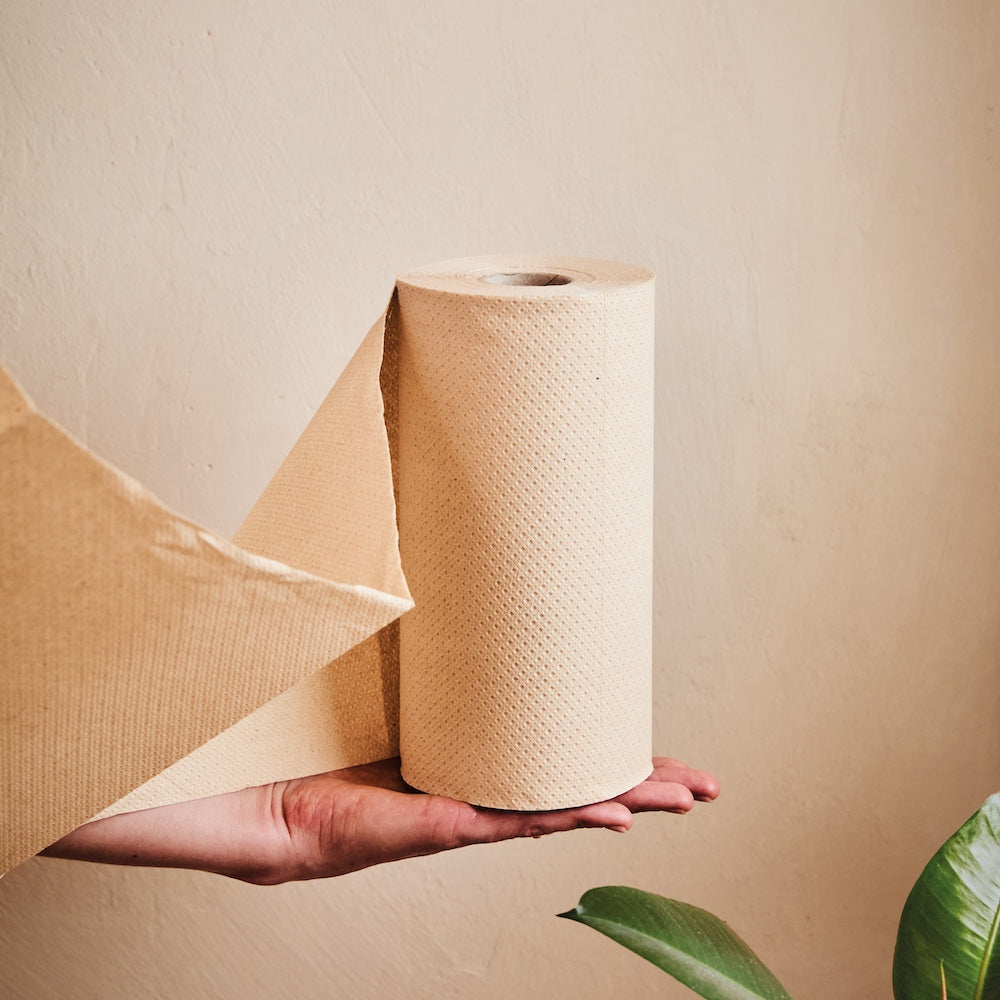
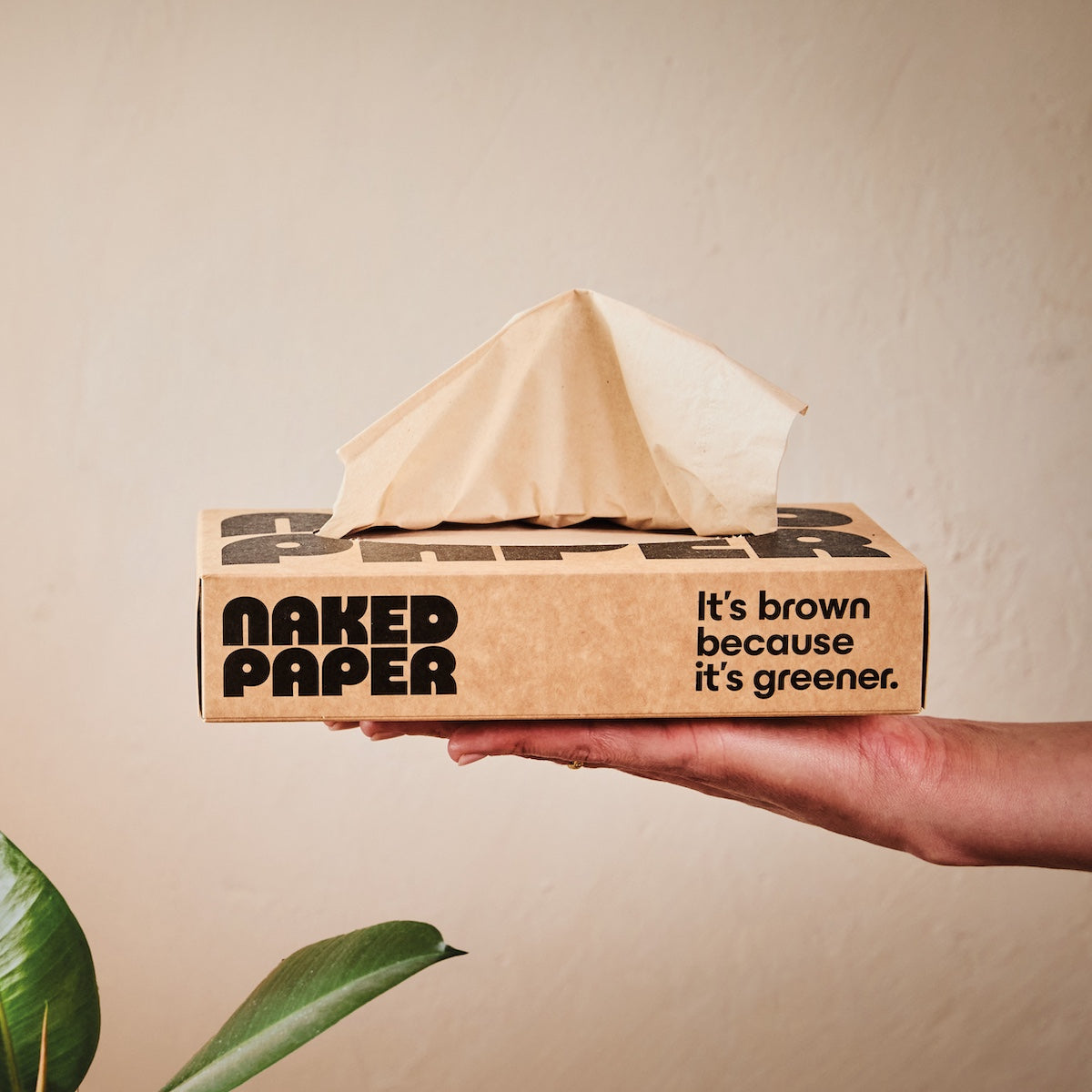
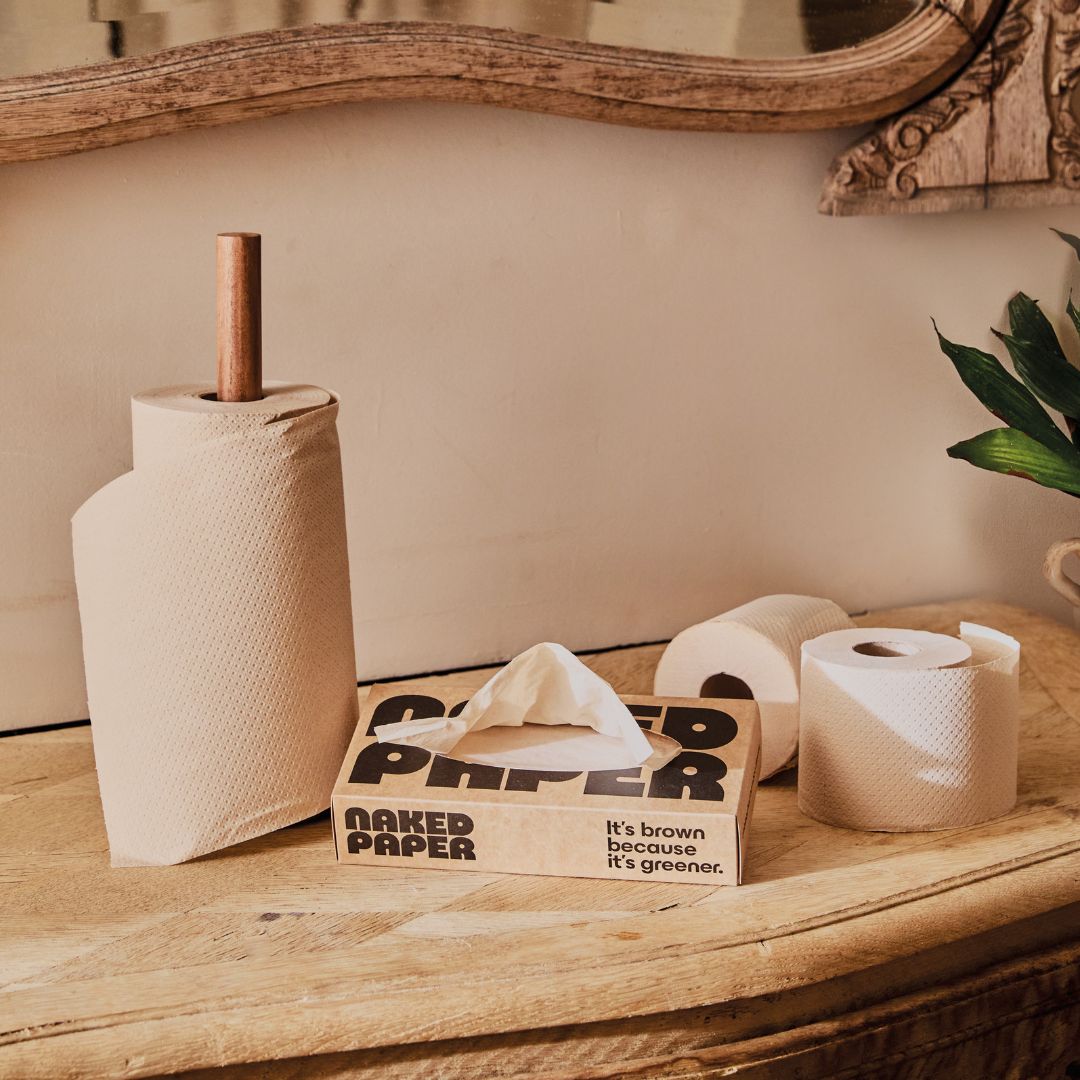
Naked Paper isn't bleached in any way, which is why it's brown. Does this make a difference beyond the colour?
We think so.
Many people with sensitive skin tell us they find our bleach-free toilet paper and facial tissues less irritating than standard products, and bleach in toilet paper has been linked to a range of minor and more serious health complaints, so we’d be happy to leave it out for this reason alone.
But the concerns around bleach aren't limited to health considerations. Manufacturing, packaging and transporting bleaching chemicals uses energy and resources, and when they're used to make paper and tissue products the run-off from factories can damage local water systems.
All of this is done simply to make toilet paper white instead of pale brown.
We don't think it's worth it.
Naked Paper is completely unbleached, which means brown toilet paper with no chlorine bleach, no peroxide bleach and no chemicals altering the colour at all.
Bleach and formaldehyde are both additives that are intentionally used in some toilet paper manufacturing processes. The source of our final chemical of concern is a bit more mysterious.

What are PFAS?
PFAS are a group of man-made chemicals that are widely used in manufacturing. You may have heard them referred to as "forever chemicals".
They've been used since the mid-20th century in products designed to resist water, grease and stains. You'll typically find them in products such as waterproof clothing, non-stick cookware and fast-food packaging.
So what's the problem?
As you might have guessed, PFAS got the nickname "forever chemicals" because they don't break down easily. The chemical bonds in these compounds are so strong that they can remain in the environment for hundreds of years, building up in water, soil, wildlife and people over time.
Scientists continue to study their effects, but PFAS have already been linked to a number of serious health concerns.
So when researchers found evidence of PFAS in samples of major global toilet paper brands in 2023, it sparked widespread alarm. It was also something of a mystery. Manufacturers aren't trying to make toilet paper resist stains or water, so why were PFAS showing up in these products?
As of 2026, we're still not completely certain. They may be entering the production process through water-repellent chemicals used to stop tissue sticking to machinery, or through packaging and wrapping materials.
When it comes to Naked Paper, we don't want any uncertainty, so we had our products independently tested.
The results:
✅ Naked Paper bamboo toilet paper: Free from PFAS
✅ Naked Paper recycled toilet paper: Free from PFAS

What ingredients are in Naked Paper toilet paper?
We don't describe our products as "chemical free" because water is a chemical, plants are made up of chemicals, and even the natural pine resin adhesive that helps hold our tissue together is technically a chemical compound.
So the thing that really matters is which chemicals are used, and how transparent the manufacturer is about them.
As our name suggests, we have nothing to hide at Naked Paper.
You can read the full breakdown of our ingredients and what they do right here, but if you just want the quick version, here's what goes into our toilet paper.
Naked Paper bamboo toilet paper
🌿 Bamboo
💧 Water
🌾 Natural starch
🌲 Pine resin adhesive
Naked Paper recycled toilet paper
♻️ Recycled card and paper
💧 Water
🧂 Cleansing salts
🌾 Natural starch
🌲 Pine resin adhesive
🌾 Additional natural starch binder
We don't use formaldehyde, chlorine bleach, peroxide, PFAS or BPA. Every ingredient we use meets REACH standards, making it non-toxic and designed to have minimal environmental impact.

Does toilet paper have chemicals?
Everything from water to plant-based resin to bamboo fibres is technically made of chemicals. The same is true of toilet paper, but at Naked Paper, we make this simple product in a simple way.
Our tissue products come in all the natural colours of their raw materials, and they're made using a small number of carefully chosen ingredients. We're happy to be open about what they are and why we use them.
Want to try toilet paper made right?
Recent blog posts
-

Out in the Wild: Wild Willy Cabins
Our wholesale customers are at the heart of Naked Paper, sharing our bleach-free toilet paper with guests and colleagues in all kinds of businesses across the UK. It’s always great to hear about the values they bring to the work...
-

Why is my toilet paper so dusty? And how can I stop it?
Dusty bathroom? Sneezing on the loo? Most of us could stand to run a hoover around more often (maybe it’s just us). But if you're consistently battling fluff in your bathroom, you might want to take a closer look at...
-

What is bleached toilet paper?
The word "bleached" has been around for a long time. The earliest recorded use of the term is from 1610, and it meant the same thing then as it means now; something that has been whitened from its natural colour, At...


