


Our new embossing

When you’re trying to make everyday products with less impact you learn to embrace change. In the five years since we started Naked Paper we’ve launched new products, revised our packaging, even changed our name.
And then there are the changes you might not notice until the roll is actually in your hand.
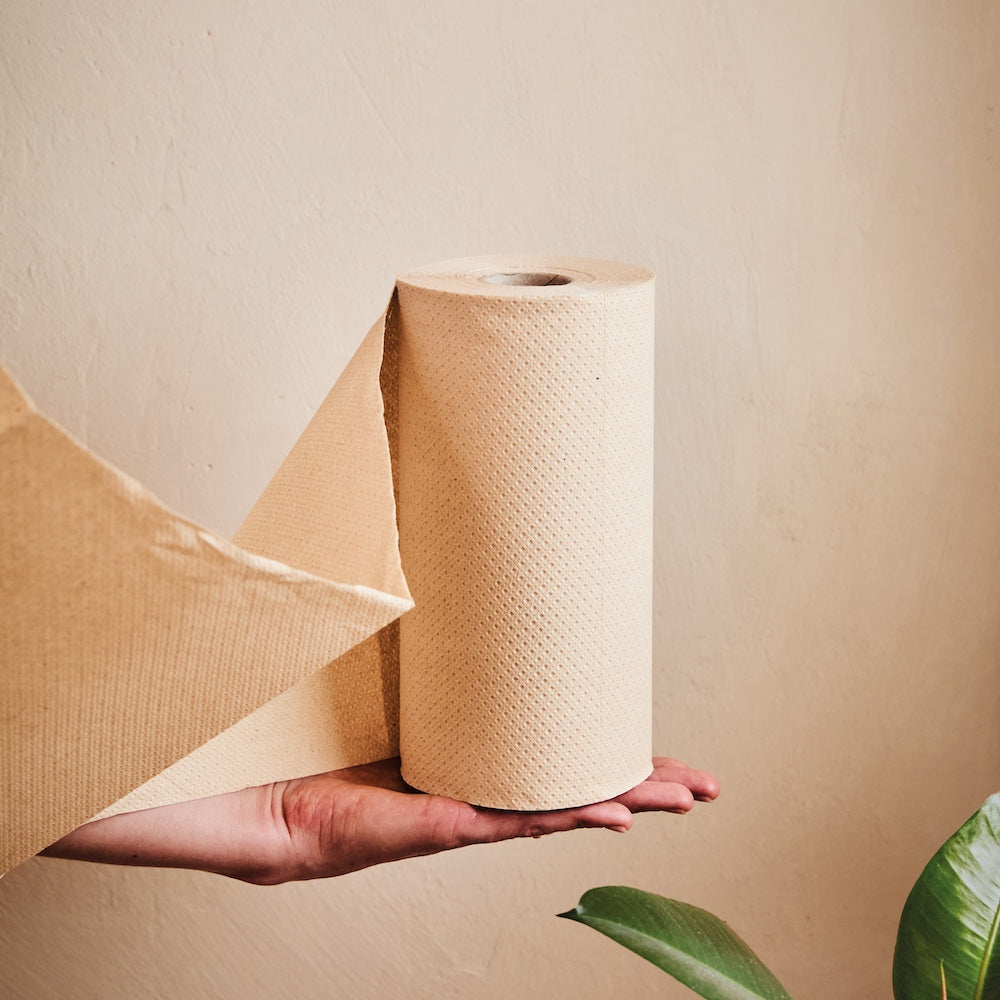
If you’re a regular customer, you might notice that your next roll of bleach-free toilet paper or kitchen roll looks a little different. Don’t worry, it will still be brown. But the familiar diamond pattern that’s been stamped on our rolls since we started making them is making way for something with a bit more character.
Today we’re talking about our embossing. What it is, why we emboss tissue products in the first place, and how we’ve come to choose a new design.
It's a change we've wanted to make for a while, and one that started, as many of our improvements do, with feedback from our customers.

Listening to your feedback
One of the great things about making household essentials that our customers get hands-on with every day is the sheer amount of feedback we get.
Over the years we've had suggestions on everything from box sizes and shapes to material types, from wholesale options to referral programs. It’s been great to work with these suggestions to make Naked Paper more tailored to our wonderful community.
One comment that cropped up time and time again was that some of you would love our toilet rolls to be just a little bit softer, and we agreed.
The challenge was finding a way to improve the feel of the paper without compromising everything else that makes Naked Paper what it is. We weren't interested in adding unnecessary chemicals or moving away from the bleach-free manufacturing process we've championed since our first roll.
So instead we looked at something that's easy to overlook but everywhere once you notice it.
Welcome to the wonderful world of embossing.

What is embossing?
Embossing is the pattern of indentations printed into sheets of paper or tissue. It's a standard feature of loo roll, kitchen rolls, and sometimes facial tissues as well.
At Naked Paper the embossing stage comes between drying and finishing our rolls. We make our toilet paper and kitchen rolls with two separate plies. These are passed through engraved steel rollers which sandwich the two plies together.
These are the embossing rollers, and up until now they've carried a simple diamond design. But this year we’ve upgraded, and rather than choosing a standard pattern we decided to create something that's unmistakably Naked Paper.

We’ve always done everything we can to reduce the impact of our products, and hoped that the bleach-free colour of Naked Paper would speak for itself. Now our rolls have a bit of extra help, because every roll carries our name.
But is this all just an exercise in branding? What does embossing actually do?
Why is toilet paper embossed?
Nearly every toilet roll you’ll find in the UK has some kind of pattern pressed into it, whether that's flowers, diamonds, or, from August 2026, the Naked Paper logo.
So why is it there?
It gives us an opportunity to add a bit of visual interest and identity to a loo roll, but if that were the only reason most toilet paper makers probably wouldn't bother. Embossing is another manufacturing process, another piece of machinery, another thing to get right, and another thing that can go wrong.
But the benefits outweigh potential complications because of how embossing changes the function and feel of the finished rolls.
When two sheets of tissue are pressed together with a pattern, it creates tiny pockets of air between the two plies, helping them stay together while making each sheet thicker and more absorbent. Two-ply toilet paper made without embossing feels flatter and more dense, and kitchen roll that’s not embossed wouldn’t soak up spills as effectively.
And embossing also comes into play when we're looking to tweak a key feature of toilet paper; how soft it feels.

How is toilet paper made soft?
There are various ways manufacturers can influence the softness of toilet paper. Most have very little impact on the environment, but there's one topic we should address first: formaldehyde.
Customers occasionally get in touch to double-check that our products don't contain formaldehyde or extra lotions. These are additives that can be used in some tissue products to boost the feeling of softness, but they aren't part of the picture for us. There's no harsh chemicals in Naked Paper.
So what do we consider when we're looking to make softer loo roll?
Raw materials are always important. Fibre like bamboo, which has long, smooth fibres, is known to create a soft smooth tissue. Our recycled toilet paper is made up of shorter fibres and while it’s still soft it does naturally feel a bit less soft in comparison.
Then there's the creping stage, when sheets of dried tissue are gently scraped from the large heated drums they dry on. The creping blade is set at a slight angle, causing the paper to buckle into a microscopic landscape of peaks and dips. By changing that angle, manufacturers can alter the texture of the paper and, in turn, the way it feels in your hand.
And then there's the matter of embossing.
One thing that consistently comes out of softness testing is that people tend to perceive larger smooth areas of paper as being softer than heavily embossed ones. That means embossing is a balancing act. Too much of it and the paper can start to feel busier and more textured. Too little and you lose some of the thickness, absorbency and structure that embossing brings.
Our new embossing roller has been designed to strike exactly that balance. The new pattern creates the Naked Paper logo out of uninterrupted areas of smooth tissue, perfectly picked out by a pattern of tiny embossed dots.
Together, those two textures create the softest-feeling Naked Paper rolls we've ever made.

What's changing?
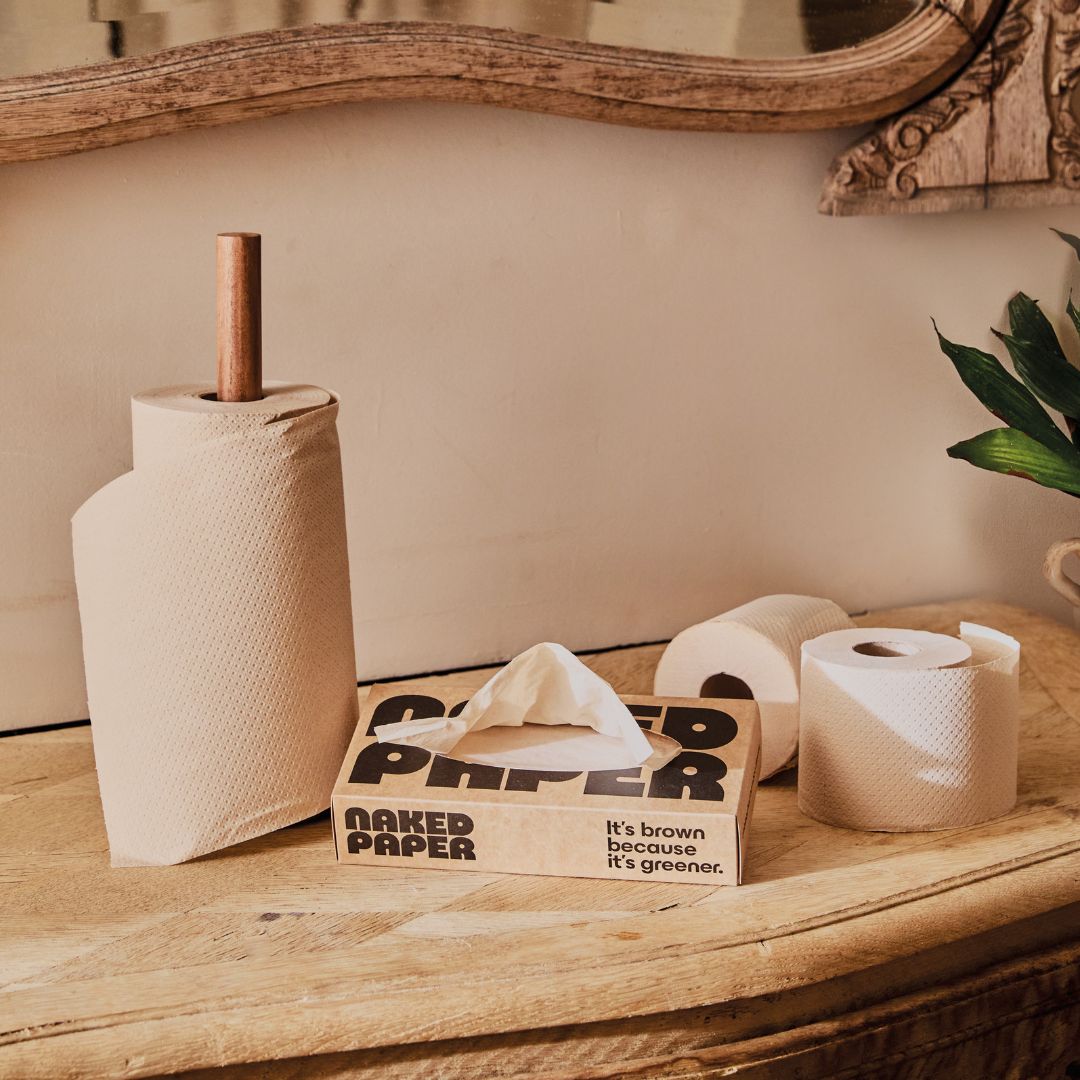
The new embossing is being introduced across all of our toilet paper and kitchen rolls.
Our tissues are staying exactly as they are. They go through a different manufacturing process, and customers regularly tell us that the smooth, bleach-free sheets are gentler on the nose than more heavily embossed, bleached alternatives.
The fundamentals of Naked Paper aren't changing.
Our bamboo pulp still comes from responsible, certified sources. Our recycled range is still made from unbleached cardboard and packaging paper collected around our factory. We still don't bleach our paper, we still dry it using renewable biofuels rather than fossil fuels, and we still avoid unnecessary extra wrapping, harsh chemicals, and plastic.
It's the same Naked Paper you know and love. Just a touch softer.

Rolling out now
You'll start seeing the new embossing appearing across your subscriptions and one-off orders over the coming weeks.
As always, we'll use up our existing stock first, so don't worry if your next delivery still arrives with the familiar diamond pattern. It just means those rolls were made before the new embossing roller was installed.
We're really excited for you to try the new-look rolls, and when they arrive we'd love to know what you think. After all, this whole change started with your feedback in the first place.
Want to try bleach-free toilet paper that gets better and better?
Recent blog posts
-

Out in the Wild: Wild Willy Cabins
Our wholesale customers are at the heart of Naked Paper, sharing our bleach-free toilet paper with guests and colleagues in all kinds of businesses across the UK. It’s always great to hear about the values they bring to the work...
-

Why is my toilet paper so dusty? And how can I stop it?
Dusty bathroom? Sneezing on the loo? Most of us could stand to run a hoover around more often (maybe it’s just us). But if you're consistently battling fluff in your bathroom, you might want to take a closer look at...
-

What is bleached toilet paper?
The word "bleached" has been around for a long time. The earliest recorded use of the term is from 1610, and it meant the same thing then as it means now; something that has been whitened from its natural colour, At...


