


What's the difference between toilet paper, kitchen roll and tissues?

At first glance, toilet paper, kitchen roll and facial tissues look pretty much the same.
They're all made from tissue, separated into convenient soft sheets. If you've ever run out of one type, it's tempting to bring in another as a substitute.
But a word of caution before you go to mop up a spilled cup of tea with toilet paper, or try to flush facial tissues.
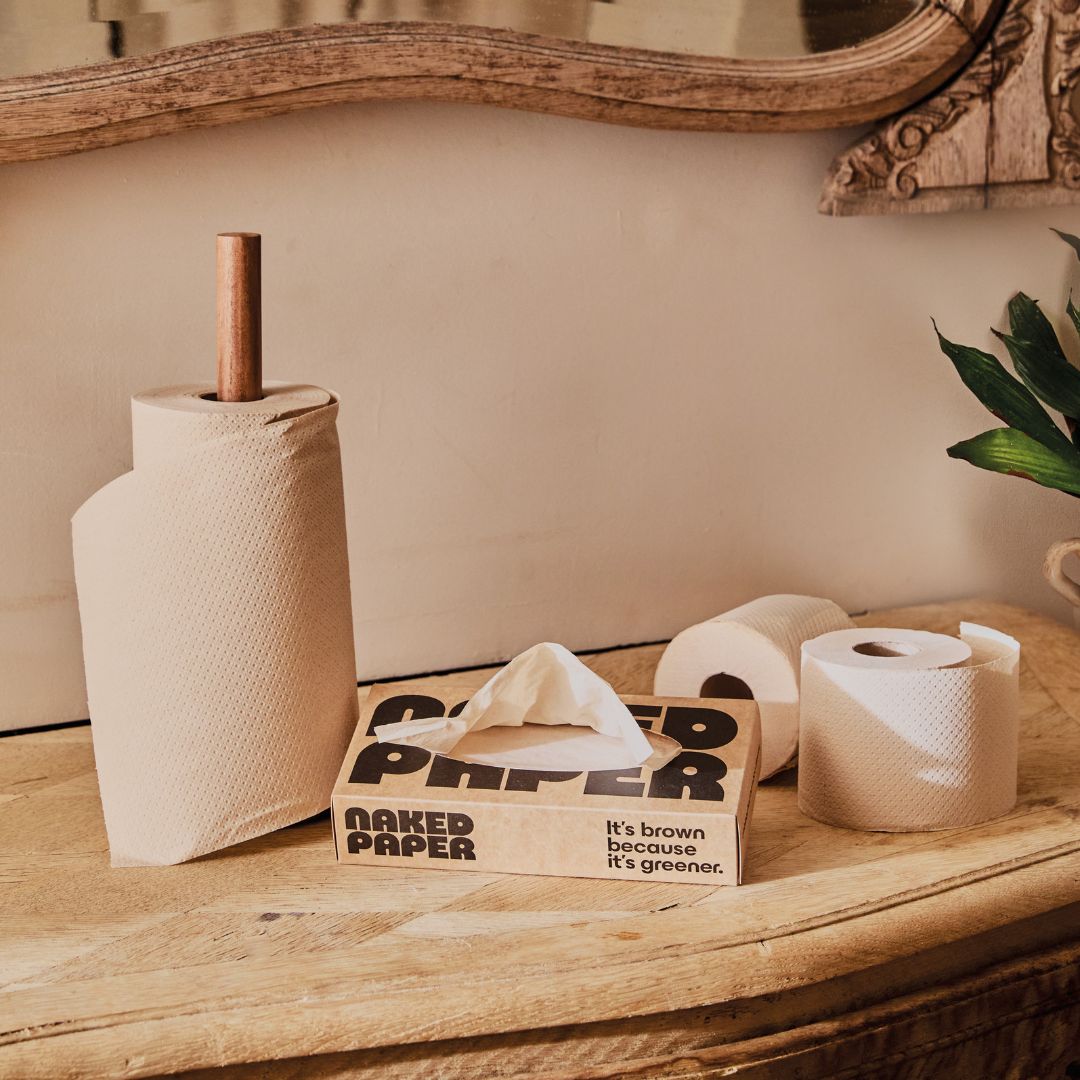
The three types of tissue we sell at Naked Paper are all made from responsibly sourced materials, without bleach, and without burning fossil fuels to dry them. But they're designed to do different jobs around the home, and switching them up might lead to less than ideal results.
Let's take a closer look.

The basics
At Naked Paper, we make bamboo and recycled versions of all of our bleach-free essentials.
Whether our customers choose bamboo or recycled mostly comes down to personal preference. Bamboo fibres are naturally longer, making the finished sheets slightly softer and stronger. Recycled tissue generally has a lower climate footprint and, in our case, it also costs less because we can collect the raw materials efficiently from the area around our factory.
The ingredients are remarkably simple as well, but it's here that the differences start to emerge.
Our toilet paper and facial tissues contain bamboo (or recycled cardboard), water, natural starches to help the tissue bind together, and pine resin adhesive. Kitchen roll contains those same ingredients, plus one extra: a plant-based wet-strength coating. And that wet-strength coating makes all the difference.

Why kitchen roll is stronger than toilet paper
Kitchen roll has a lot on its plate, figuratively speaking.
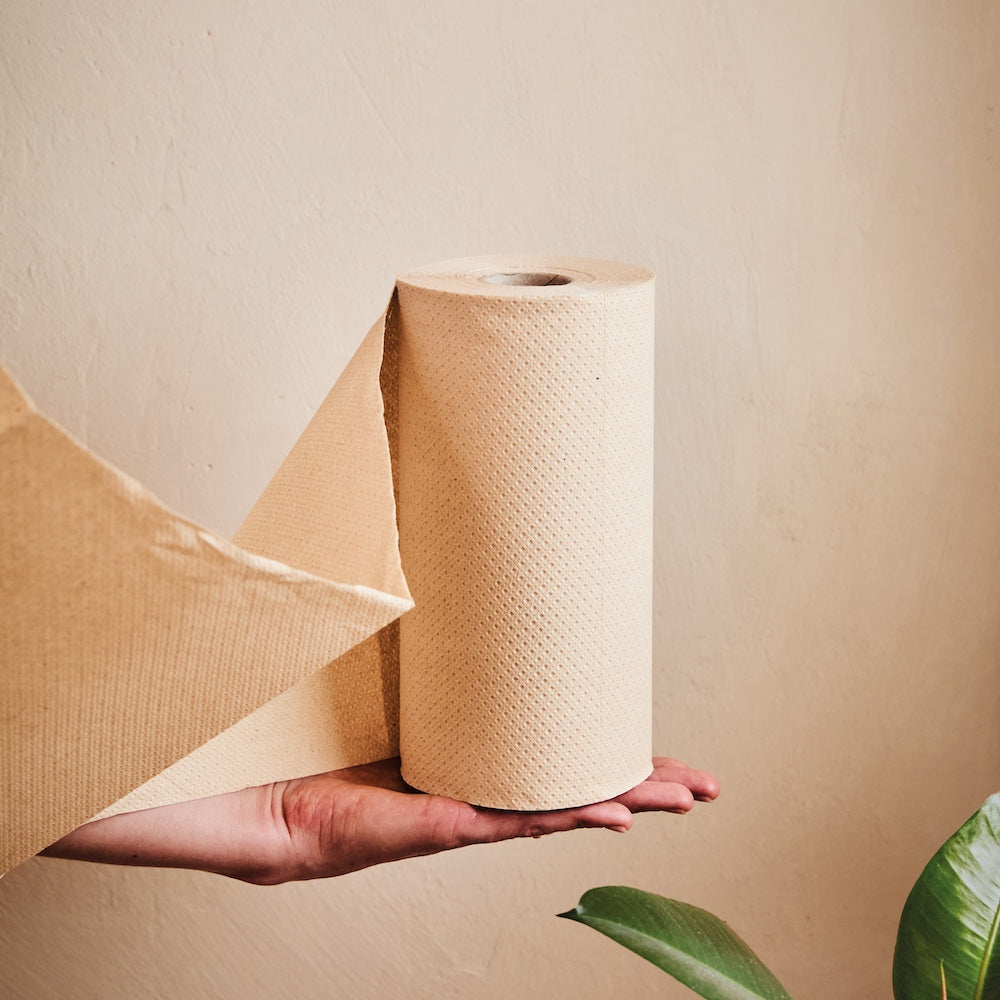
Its daily tasks include wiping up spills, cleaning kitchen surfaces, and draining water or fat from food. If it fell apart every time it got wet, it wouldn't be much use, so its strength is boosted by a thin, natural resin coating.
This helps the cellulose fibres hold on to one another, keeping the basic structure of the sheet intact even when it's wet.
That makes it perfect for your kitchen counter, but a bit of a hazard for your plumbing. So please don't use it instead of toilet paper.

Why toilet paper breaks down
When it comes to toilet paper, the situation is completely different. Unlike kitchen roll, you want it to fall apart as quickly as possible when it gets wet and comes under pressure, because those are the two forces at work as it travels through your plumbing.
Without that wet-strength coating, there's nothing to hold the tissue together once it's wet, and the bonds between the cellulose fibres come apart easily. At Naked Paper we test every batch of toilet paper to make sure it's breaking down as it should.
What does this mean if you've run out of kitchen rolls, and are thinking of grabbing a loo roll instead?
For most tasks, we'd advise against it.
In the same way that kitchen roll isn't a good substitute for toilet paper, toilet paper isn't a good substitute for kitchen roll. Try cleaning up a spill with toilet paper and you'll quickly find that the tissue disintegrates on contact with water, oil, or cleaning fluid, leaving you with a pulpy mess in your hand or on your counter.
So kitchen roll and toilet paper are designed quite differently, and they won't behave the same way when wet. But what about the wildcard option: facial tissues?

Can you flush tissues?
You'd be surprised how often people get in touch to ask whether they can flush Naked Paper facial tissues down the toilet.
We can see the appeal. If you're using tissues to remove makeup or blow your nose, there's a good chance you're already in the bathroom, and a flush might seem like the simplest way to dispose of them.
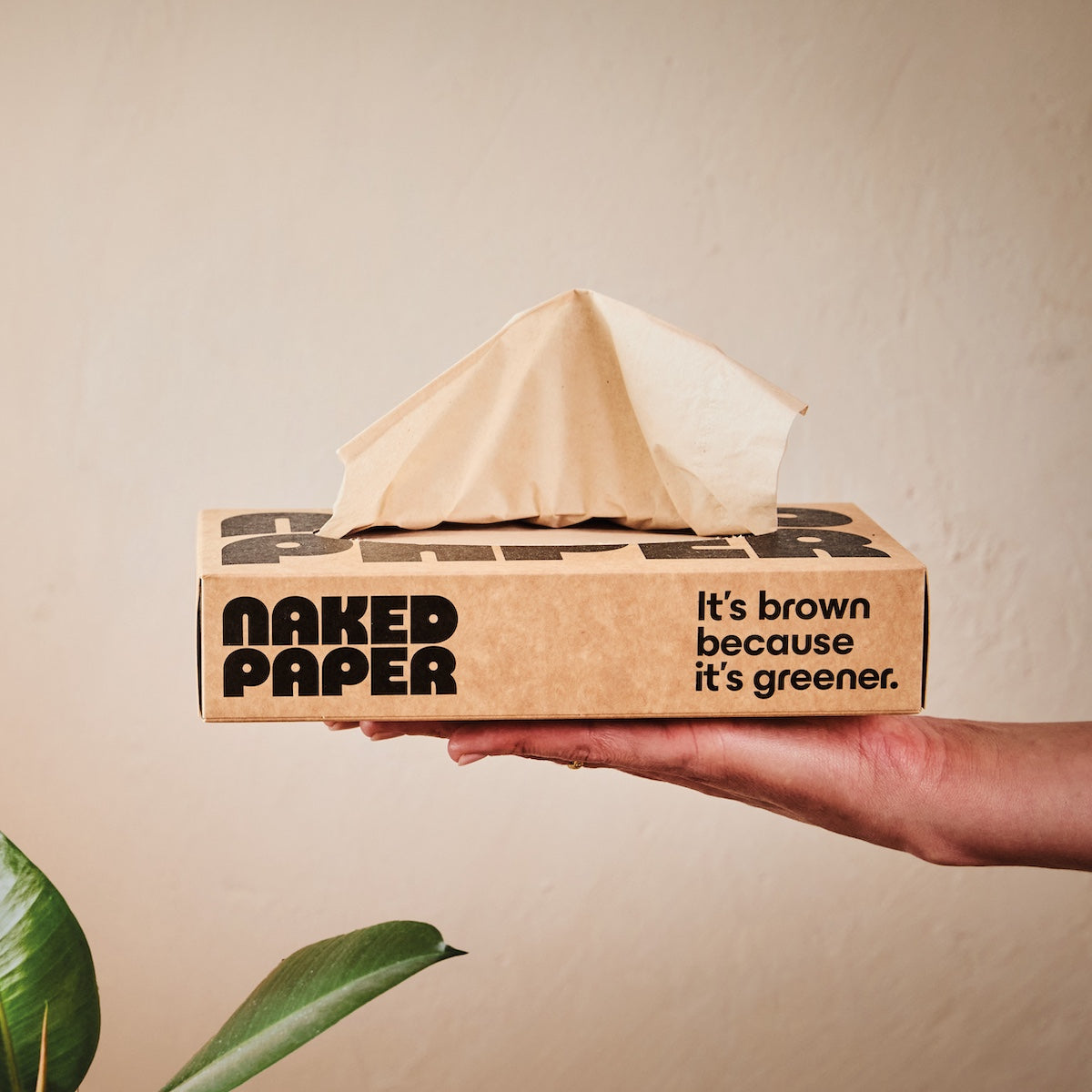
But the bin is your best bet. Although facial tissues don't have the same wet-strength coating as kitchen roll, each sheet is made a little thicker than standard toilet paper and, like kitchen roll, they're designed to hold their shape when they get wet.
This means they're more likely to survive an accidental trip through the washing machine than toilet paper, which is a bonus for something that's easily left forgotten in a pocket. But it also means the flush is out.
So no loo roll substitution. But what if you've got a spill to deal with and no kitchen roll? Will tissues work just as well? Probably not, because of the final difference between the three: embossing.
Toilet paper and kitchen roll are both designed with absorbency in mind, and both generally feature embossing. This is a pattern pressed into the tissue that helps it hold more liquid.
You're much less likely to find embossing on facial tissues, and Naked Paper tissues don't have any at all. It makes for a smooth tissue that's gentle on your nose, but it also means it won't soak up spills in the same way.
There's also a final question of convenience. Tissue boxes are designed to dispense one sheet at a time, so gathering enough tissues to mop up a spill is probably going to be more hassle than just reaching for a tea towel.

Conclusion
Those are the differences between our products. They're all brown, they're all bleach-free, but they're surprisingly specialist when it comes to the jobs they do, and don't.
Here's our final verdict if you want to use...
🪠🔴Kitchen roll instead of toilet paper: Absolutely not. It could easily cause blockages.
🟠🦔Kitchen roll instead of tissues: Should work in a pinch, but the deep embossing might be a bit rough on your skin.
💪🔴Tissues instead of toilet paper: We'd advise against it. Our tissues are sturdy little squares and they're not designed to break down.
🐢🟠Tissues instead of kitchen roll: Slow, inefficient, and not especially absorbent.
🪣🔴Toilet paper instead of kitchen roll: It'll probably create more mess than it cleans up.
🤷🟢Toilet paper instead of facial tissues: We've all been there. No judgement from us.
The good news is that each product is designed to do its own job brilliantly. Toilet paper in the toilet, kitchen rolls in the kitchen, and facial tissues wherever you like (just don't flush them down the loo!)
Want to try everyday essentials that are bleach-free and task-focused?
Recent blog posts
-

Out in the Wild: Wild Willy Cabins
Our wholesale customers are at the heart of Naked Paper, sharing our bleach-free toilet paper with guests and colleagues in all kinds of businesses across the UK. It’s always great to hear about the values they bring to the work...
-

Why is my toilet paper so dusty? And how can I stop it?
Dusty bathroom? Sneezing on the loo? Most of us could stand to run a hoover around more often (maybe it’s just us). But if you're consistently battling fluff in your bathroom, you might want to take a closer look at...
-

What is bleached toilet paper?
The word "bleached" has been around for a long time. The earliest recorded use of the term is from 1610, and it meant the same thing then as it means now; something that has been whitened from its natural colour, At...


