

Why we say "climate footprint" not "carbon footprint"

Our climate is changing as a result of the way people live, travel, and shop. And while everyone has a role to play in the transition to more sustainable ways of living, the bulk of the responsibility has to lie with the businesses and organisations that produce most of the emissions.
At Naked Paper, we’re working to do our part. We measure and track all of the emissions involved in making and transporting our bleach-free toilet paper, kitchen rolls, and tissues, and we have a plan, validated by the Science Based Targets initiative, to reach net zero emissions by 2040.
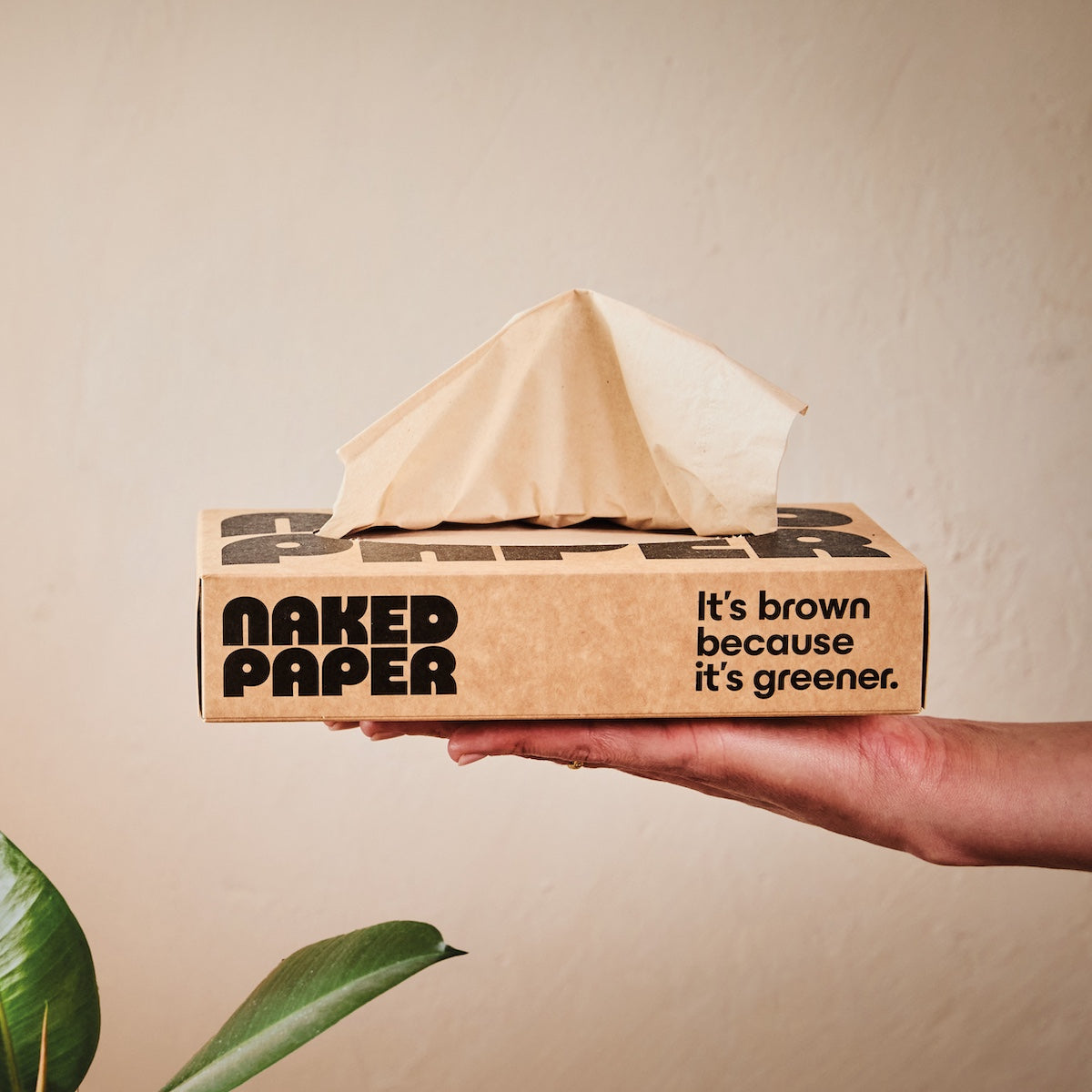
We don’t hide behind offsetting, and we don’t pretend our products are carbon neutral. We print our climate footprint on every box we sell.
But why do we call it a climate footprint and not a carbon footprint?

Carbon is just one part of the story
When you flush a bit of loo roll, wipe up a kitchen spill, or blow your nose with a tissue, you’re using something that took energy and materials to make and move. That process releases greenhouse gases; gases that are building up in the atmosphere and warming the planet.
Most people focus on carbon dioxide, and it’s certainly important. But it’s not the whole picture. Other greenhouse gases also contribute to the problem. Methane, for example, traps heat far more powerfully than CO2, and nitrous oxide is more powerful again.
The term “carbon footprint” became popular because carbon is easy to talk about, and carbon dioxide emissions are causing about three quarters of the global warming we’re experiencing.
But there’s that remaining 25% to think about. If we only labelled our products with carbon data, we wouldn’t be telling the full story of how our business contributes to climate change, or how we’re improving.
Above all, we want to be transparent, and reporting our climate footprint rather than just our carbon footprint is the best way to do that.
And when we say reporting, we mean printing it right on our boxes.

Why we’re climate labelling
Our climate footprint bundles together all the greenhouse gases emitted when we make and transport Naked Paper and expresses them as one number. Here’s the full run down:
🧻 Toilet Paper
🌱 Bamboo: 0.59 kg CO₂e
♻️ Recycled: 0.35 kg CO₂e
🧼 Kitchen Roll
🌱 Bamboo: 0.28 kg CO₂e
♻️ Recycled: 0.16 kg CO₂e
🤧 Tissues
🌱 Bamboo: 0.38 kg CO₂e
♻️ Recycled: 0.30 kg CO₂e
Those are the numbers, the next challenge is making them meaningful.
Most of us don’t instantly know whether a figure is high, low, or somewhere in between. When we say our recycled toilet paper is responsible for 0.35kg of CO2e per kg, is that better or worse than standard toilet paper? Is it better or worse than other eco brands?
Making that number useful is something we think about constantly, and we’re always interested to see how other companies and organisations tackle the task. There are two ideas we’ve found particularly helpful.
📘 Comparisons – To say that your products are more sustainable, or have lower emissions, you need to have comparisons on hand. This is a requirement of the UK’s Green Claims Code, and we take it seriously.
You can see comparisons with standard tissue products and other companies (the ones who publish their climate figures) on our green credentials page.
🏷️ Climate labelling – We don’t have comparison tables on our products, but we do print our climate footprint on them. We do this partly to show good faith, that we want to be transparent about the real impact of making Naked Paper.
We also do it in the hope that other brands will start to do the same thing, so that people can more easily compare themselves and everyone has an incentive to work to reduce their numbers, like we are.

Conclusion
That’s the whole story of why we say “climate footprint” instead of “carbon footprint,” and more importantly, what we do with that number.
We believe that transparency drives progress. By choosing to measure, report, and openly label our climate footprint we’re telling the full story of our impact and holding ourselves accountable as we work toward net zero.
It’s one small step toward a bigger shift, and we hope others join us.
Want to try tissue products made with the big picture in mind?
Recent blog posts
-

Why isn't our packaging green?
There’s an awful lot of green about these days. Spend a few minutes paying attention next time you visit the supermarket and you’ll see it; products that are sold as having some kind of environmental benefit are often packaged, labelled,...
-

250,000 thank yous
The life of a loo roll is usually predictable. It starts big, steadily gets smaller, and ends as a cardboard tube. The holder, the hand, the flush. The biggest surprise we serve up at Naked Paper is the fact that...
-

Always brown, never uniform
Every now and then we receive an email like this: "We've been subscribers for a while now and our most recent delivery is significantly lighter than the usual colour of rolls. It's not just the odd roll, it's the entire...


