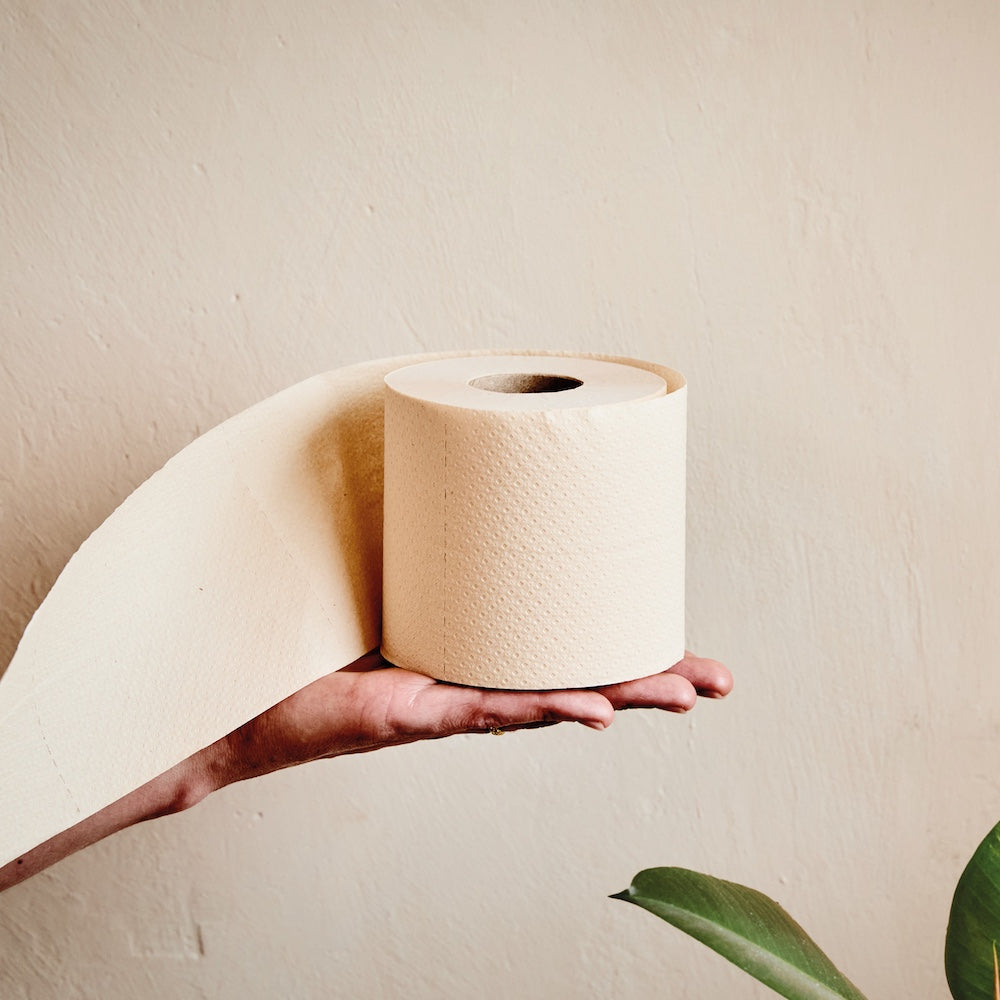
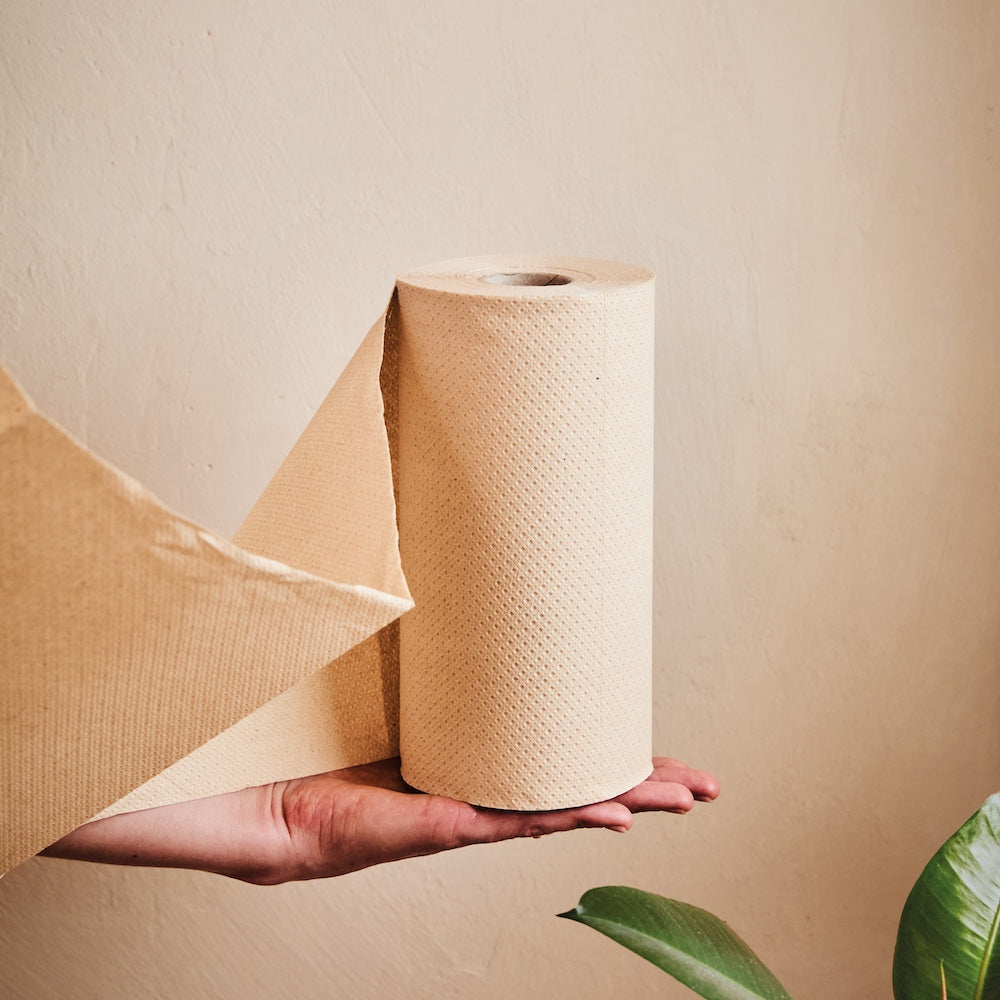


What’s so good about bleach-free kitchen roll?

For many of us, kitchen roll is the unsung hero of the home. Spilled milk? Mopped. Greasy bacon? Drained. Sticky hands? Wiped.
Have you ever stopped to look at that hard-working sheet and wondered: why is it so white?
Probably not. Like toilet paper, it’s such a staple of the daily routine that it’s easy to overlook. At Naked Paper, we’re all about looking twice at the things we use every day. So, here’s a break from our usual loo roll content for a look around the kitchen.
We’re exploring why bleaching kitchen roll became standard in the first place, and why we think the practice belongs in the 20th century.

Why are paper towels bleached in the first place?
To understand why your kitchen roll is white, we have to go back over a century.
In 1922, the Nibroc Paper Company in the US, led by inventor William E. Corbin, launched the first disposable paper hand towel. It was pitched as a hygienic replacement for the communal fabric towels found in public toilets, which were known breeding grounds for bacteria.
Nine years later, in 1931, the Scott Paper Company introduced their own version for the home. These became a popular daily convenience; single-use, absorbent sheets that could be binned after use.
So, why the bleach? It likely boils down to manufacturing convenience. Because the Scott Paper Company and its successors were already producing bleached toilet tissue, it made sense to keep the same processes and appearance for kitchen rolls. If they were already bleaching one tissue to create a "premium" look, it would have seemed odd to leave the other brown.
For the past century, manufacturers have simply continued bleaching kitchen rolls because that is how it has always been done.

Does bleach in kitchen roll keep it clean?
Kitchen roll started as a hygiene item, and it’s still used to keep homes clean today. Since these sturdy sheets come into close contact with hands, surfaces, and food, it’s natural to want them to be sanitary.
But does the bleaching process actually make the tissue cleaner?
The short answer is no. Bleaching is a cosmetic treatment; it has nothing to do with hygiene. At Naked Paper, we believe in transparency. Whether we use bamboo or recycled materials, the cleanliness comes from filtering the raw materials and drying with blistering hot air. Turning the paper white adds no hygienic value.
We make two types of kitchen roll, bamboo and recycled, and here is how we ensure they're clean as a whistle.
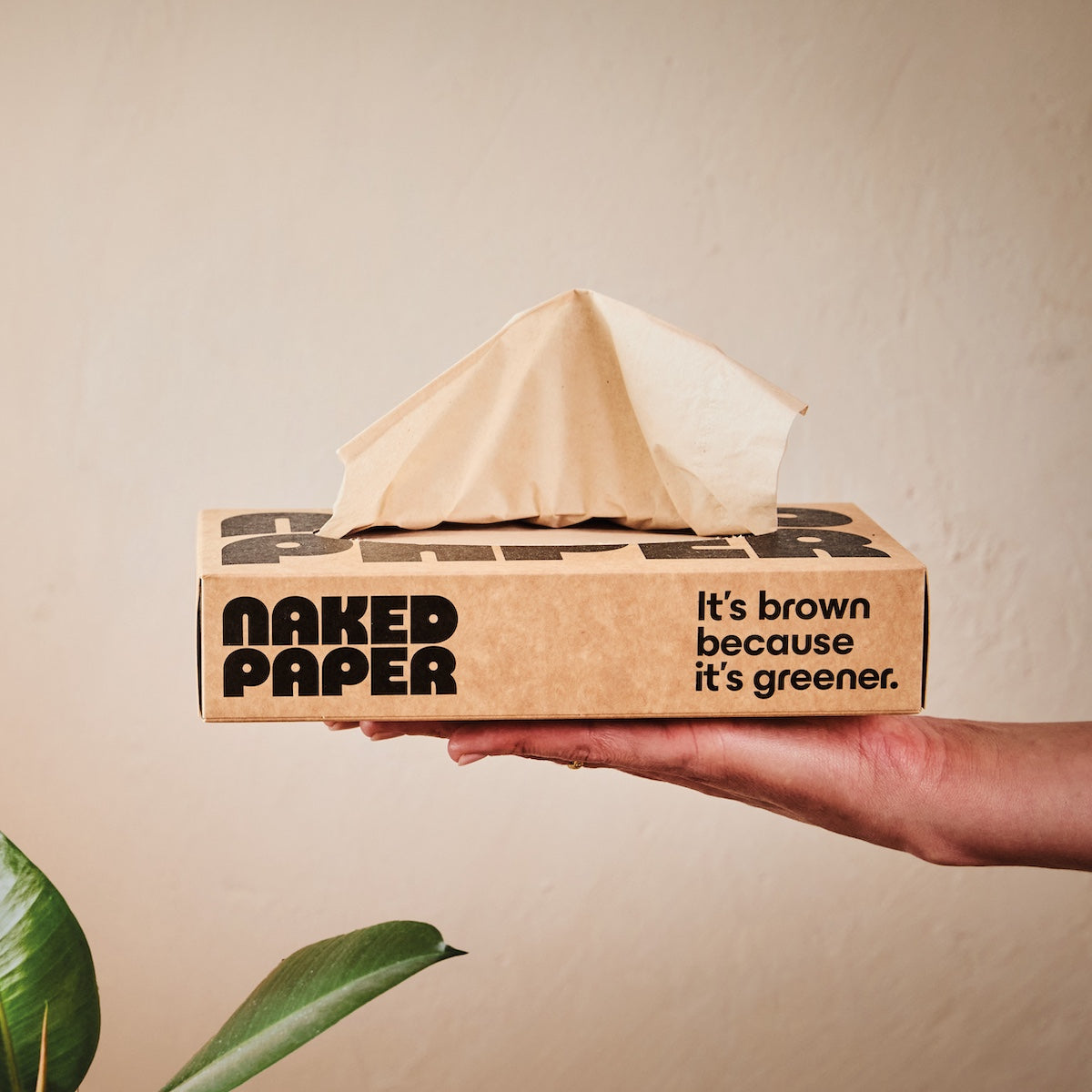
The bamboo path Bamboo is a dream material for hygiene. It arrives at our factory in dehydrated blocks of shredded fibre. It is grown without pesticides and is naturally antibacterial. We use this soft bamboo for our facial tissues and kitchen towels to ensure a naturally clean start.
The recycled path When we use recycled card and paper, things get a bit more complex. These materials often arrive with "hitchhikers" like staples, plastic film, or glue. We use a state-of-the-art recycling centre with automated conveyors to filter out debris with incredible efficiency. We currently recover 82% of the good fibres and are aiming for 100%.
Once anything that's not paper is gone we create a pulp. We use multiple separation stages and gentle, REACH-regulation-standard salts and soaps to break these down. These are non-toxic and environmentally neutral. You can read more about our simple ingredients here.
Whether it’s bamboo or recycled, the most vital step for guaranteeing cleanliness comes next…
The big furnace We dry our tissue at temperatures over 600°C. This is far too hot for any bacteria to survive. By the time the paper is cut into rolls, it is perfectly hygienic and ready to use without a drop of bleach in sight.

Why is bleach-free kitchen roll better?
If bleaching is the industry standard, why do we avoid it?
We aren't just bucking convention for the sake of it; the bright white shade associated with everyday tissue comes with its own environmental footprint.
Better for water Historically, paper was bleached using chlorine-based chemicals that released harmful pollutants into waterways, damaging both human health and aquatic ecosystems.
While many brands have moved to "Elemental Chlorine Free" (ECF) or “Totally Chlorine Free” (TCF) methods, research suggests these reduce pollutants but don’t eliminate them. Bleaching is also a thirsty process. Pulp must be washed repeatedly to strip away pigment, using vast amounts of water just to change the colour by a few shades.
Better for skin Skin is our largest organ, and substances it contacts can be absorbed into the bloodstream. Medical journals have highlighted links between residual bleaching chemicals and health complaints ranging from minor skin irritation to more serious long-term concerns.
We often hear from customers with sensitive skin who find that switching to unbleached Naked Paper products has helped. With kitchen rolls, it’s not just your skin to consider—anything touching your meals should be certified food-contact safe. Like ours.
Better for energy Stripping colour from plant fibres requires significant energy. The bleaching stage accounts for a large portion of the total fuel used in paper mills. Skipping this process lowers the overall CO2e footprint, which makes sense for an item designed to be used once and thrown away.

Conclusion
Bleach-free kitchen roll isn’t going to save the world on its own, but skipping the bright white finish offers simple benefits with no drawbacks.
-
🌿 Fewer pollutants: No bleach means no risk of unnecessary chemicals or dioxins entering our water systems.
-
💧 Less energy and water: Skipping the bleach reduces the water and energy used in repeated washing cycles.
-
🙌 Skin safe: A more gentle product for those prone to irritation. And it’s food-contact safe, too.
-
🔥 Clean as a whistle: Drying at over 600°C ensures Naked Paper is 100% hygienic without unnecessary chemicals.
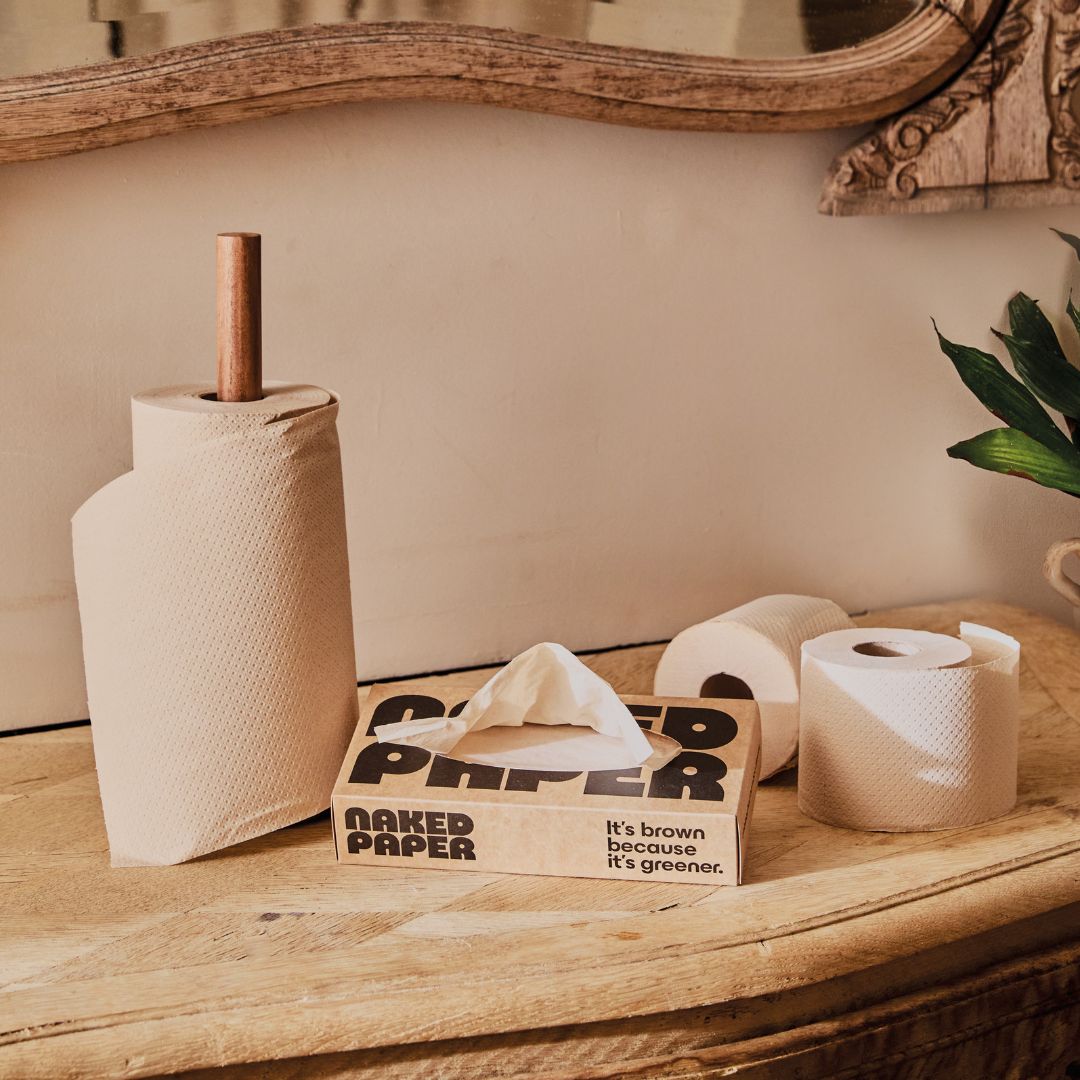
We can leave bleached tissue in the 1900s. Bleach-free kitchen roll is just as clean, has a lower impact, and looks great on your counter.
Want to try it yourself?
Recent blog posts
-

Why isn't our packaging green?
There’s an awful lot of green about these days. Spend a few minutes paying attention next time you visit the supermarket and you’ll see it; products that are sold as having some kind of environmental benefit are often packaged, labelled,...
-

250,000 thank yous
The life of a loo roll is usually predictable. It starts big, steadily gets smaller, and ends as a cardboard tube. The holder, the hand, the flush. The biggest surprise we serve up at Naked Paper is the fact that...
-

Always brown, never uniform
Every now and then we receive an email like this: "We've been subscribers for a while now and our most recent delivery is significantly lighter than the usual colour of rolls. It's not just the odd roll, it's the entire...


