


Why isn't our packaging green?

There’s an awful lot of green about these days. Spend a few minutes paying attention next time you visit the supermarket and you’ll see it; products that are sold as having some kind of environmental benefit are often packaged, labelled, and stamped in shades of green.
If we just take the toilet paper aisle as an example, (makes sense given our business) we see green-coloured labelling used for all sorts of environmental features; from FSC certified fibres to packaging made from partially recycled plastic.
It's such a familiar shorthand most of us barely notice it, and we think this is the problem. If every product looks the same, how can you judge which are actually meaningfully better for the environment?
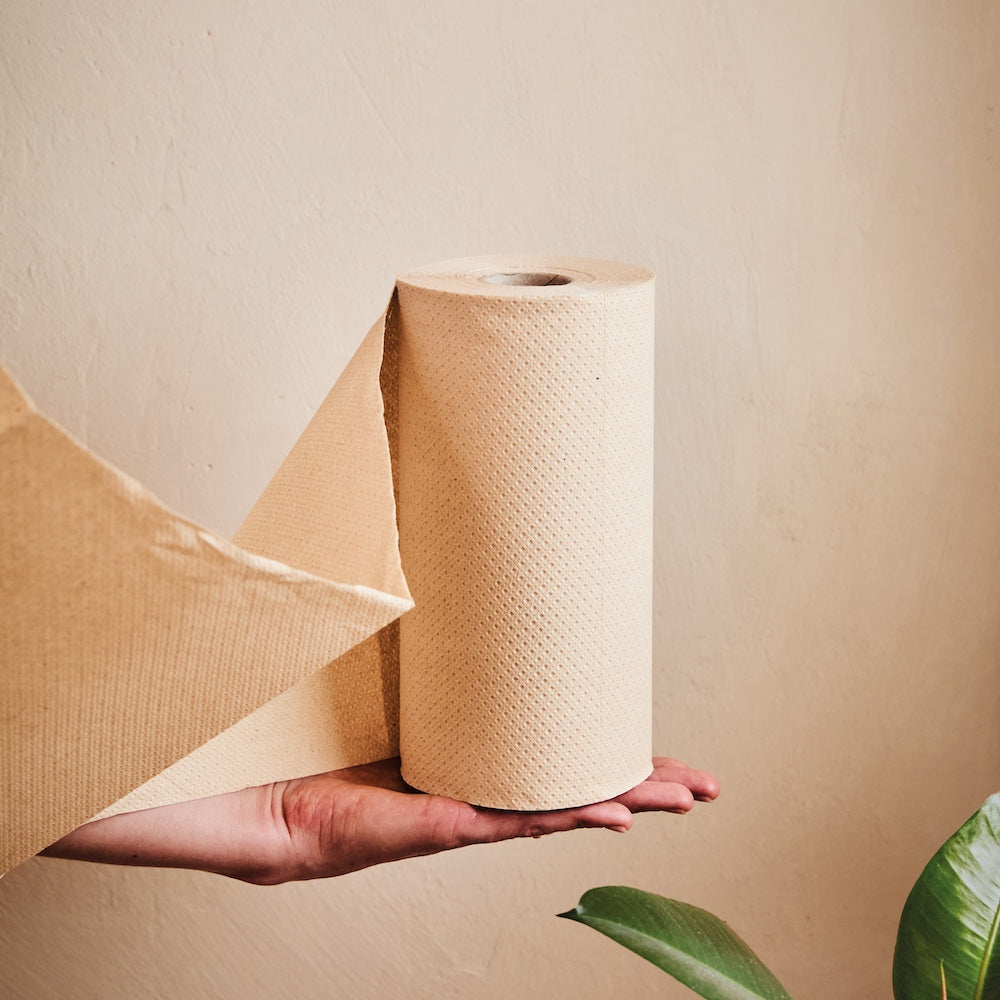
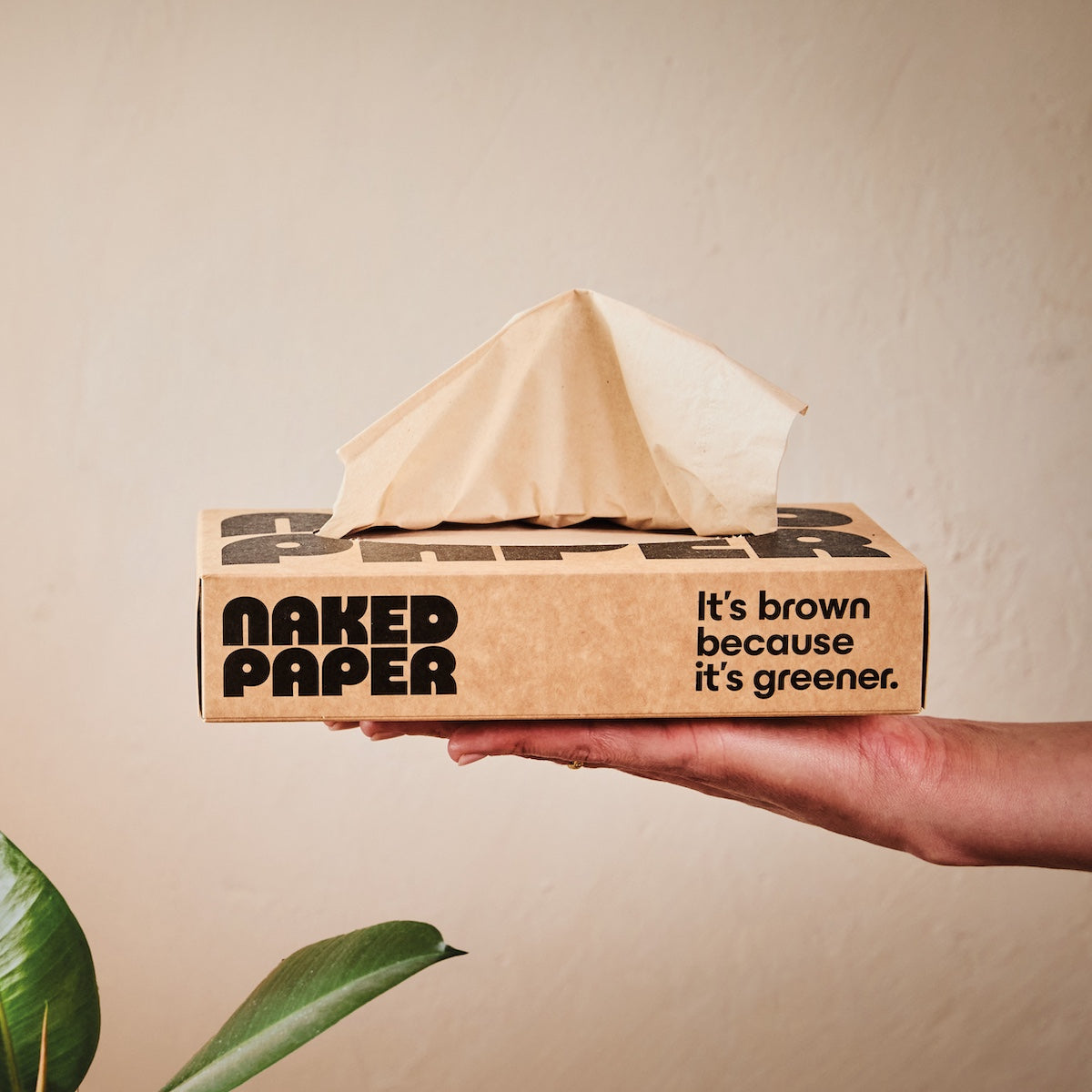
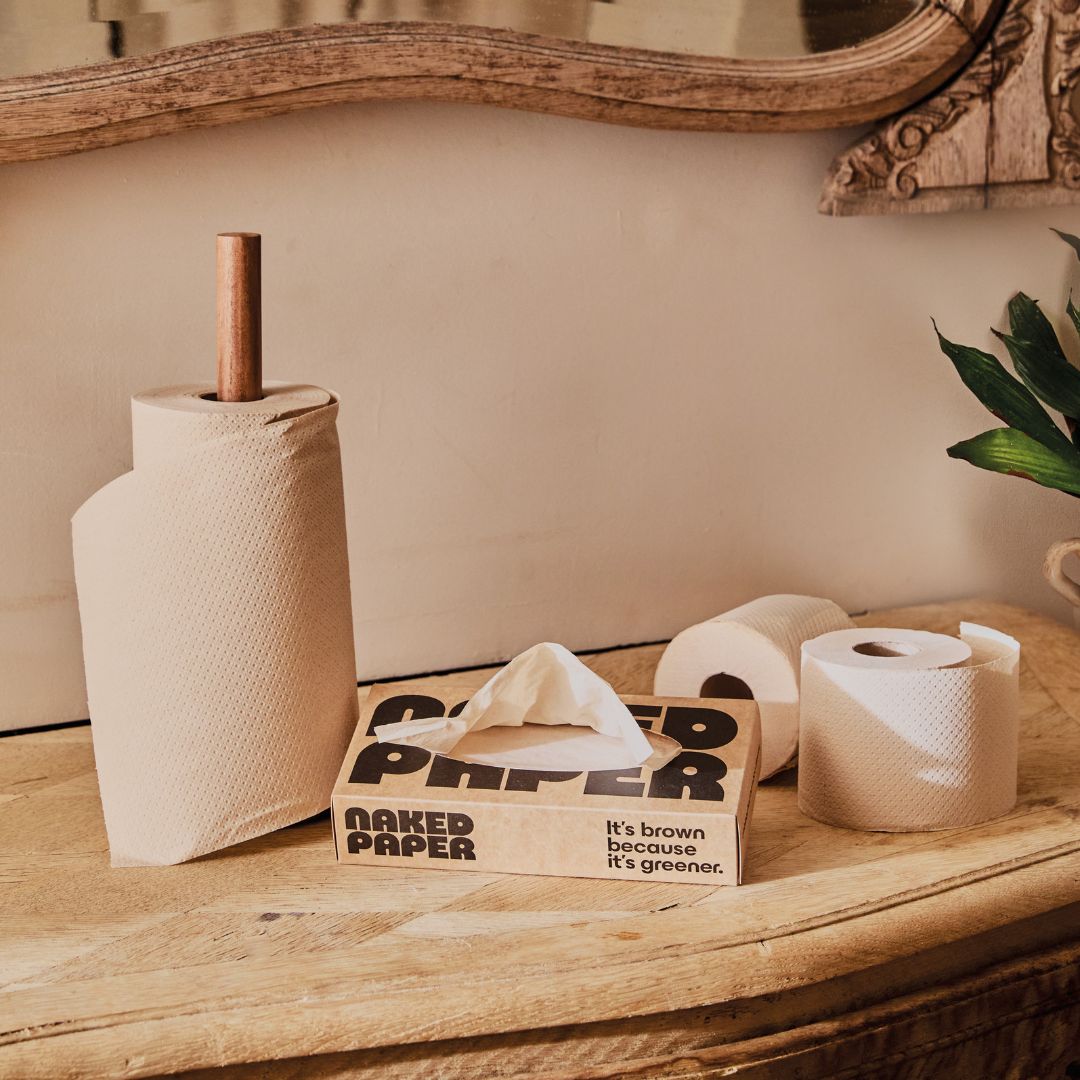
When we rebranded from Naked Sprout to Naked Paper, we decided to change things up. Our boxes are brown because our products are brown. It’s a decision to keep things grounded in reality, and it only works if you’re willing to show your workings.
Which is exactly what we do.

The colours come from our materials
The bamboo we use to make our bamboo tissues, kitchen rolls, and toilet rolls comes with its own natural colour, inherited from the lignin in the fibres of the bamboo plant. Our recycled versions are made from waste cardboard and packing paper, which are also brown.
We don’t bleach any of this colour away, so our products end up, you guessed it, brown. There's no special symbolism at work. The colour of Naked Paper toilet paper, kitchen rolls, and tissues isn’t an example of us trying to look more eco-friendly, it’s simply what happens when you don’t bleach bamboo or cardboard.
And not bleaching toilet paper is the more environmentally friendly option. Bleach in toilet paper is associated with a range of unnecessary environmental harms, and even harms to health, and it's simply not necessary for something you're going to flush away.
We think this approach is the most honest way to communicate, and the best way forward for us as a business. Rather than covering our products in green logos without giving more details, we’re showing you a meaningful difference from the standard.
The colour is the first example you’ll see, but it’s not the only one.

We'd rather show our workings
If you've ever ordered from Naked Paper, you might have noticed that our emails, our website, and even our boxes come with plenty of detail.
We tell you where our boxes and rolls are made, the gentle ingredients we use to clean and bind our tissue, and how our products are transported from the factory floor to your front door. We also include climate labels showing the climate footprint of every product.
We’re out on a bit of a limb here; most companies don’t share the names of the places where their products are made, let alone pictures.
But as Naked Paper has grown we’ve become more and more convinced that making things more sustainably than the standard means sharing more detail than the standard.
That way people can see what general descriptions like "green" or "planet friendly," can actually mean in practice, and we can all expect better from the businesses we buy from.
Our CO2e emissions are a great example.

Why we focus on reducing emissions
Making tissue and paper products uses a lot of power. Specifically, it uses a lot of heat.
Paper makers dry their products using hot air that comes from burning fuel in a furnace. In most cases, they use fossil fuels; either coal or gas. As a result, the drying stage of paper making is where you’ll find most of the climate-changing emissions that come from making toilet rolls.
But you wouldn’t know this from a lot of toilet paper brands, who will proudly mark their boxes with a (usually green) label saying that their products are “Carbon neutral” or “zero carbon”.
Sounds too good to be true? It is.

What "carbon neutral" really means is that the company has calculated the CO2e emissions that were involved in making their products, and made a payment to an “offsetting” company who will use this money to plant trees, build solar panels, or take some other action that is supposed to balance out the emissions they’re responsible for.
Unfortunately, there’s no evidence that it works. Carbon accounting is incredibly complicated, and offsetting often depends on predictions about what will happen over decades. Will this forest still be standing in fifty years? Would these trees have been planted anyway?
In fact, some climate scientists have argued that climate offsetting is essentially being treated as a "license to pollute", distracting us all from the urgent task of cutting climate changing emissions in the first place.
This is the task we’ve set ourselves at Naked Paper.
We power our furnaces with renewable biofuels, meaning that a huge chunk of emissions that other companies try to offset are just not there at all. And we share the actual emissions involved in making our toilet paper in the form of an independently-calculated CO2e figure that we print on every box.

Bleach-free, brown, and based in reality
We can’t say we’ve got it all figured out. Any business making a physical product has an environmental impact. At Naked Paper we use materials, we transport goods, we create emissions.
The challenge for us is not to have no impact; that’s impossible. The actual challenge, and we think this is true for all manufacturers, is to be open about how our products are really made.
Transparency isn’t always easy, and showing your working is always intimidating. But we constantly see the benefits it brings to us and our customers, and this pushes us forward.
It’s why we became one of the UK’s highest scoring B Corps, it’s why we won the King’s Award for Sustainable Development, it’s why we top the charts for ethical toilet paper at Ethical Consumer.
And, yes, it’s why our packaging isn't green.
Want to try Naked Paper?
Recent blog posts
-

Out in the Wild: Wild Willy Cabins
Our wholesale customers are at the heart of Naked Paper, sharing our bleach-free toilet paper with guests and colleagues in all kinds of businesses across the UK. It’s always great to hear about the values they bring to the work...
-

Why is my toilet paper so dusty? And how can I stop it?
Dusty bathroom? Sneezing on the loo? Most of us could stand to run a hoover around more often (maybe it’s just us). But if you're consistently battling fluff in your bathroom, you might want to take a closer look at...
-

What is bleached toilet paper?
The word "bleached" has been around for a long time. The earliest recorded use of the term is from 1610, and it meant the same thing then as it means now; something that has been whitened from its natural colour, At...


